Winston Salem NC Homes For Sale
Area Real Estate News & Market Trends
You’ll find our blog to be a wealth of information, covering everything from local market statistics and home values to community happenings. That’s because we care about the community and want to help you find your place in it. Please reach out if you have any questions at all. We’d love to talk with you!
Young Adults Are Reviving Small Towns—and They’re Moving at the Highest Rate in a Decade
March 13, 2025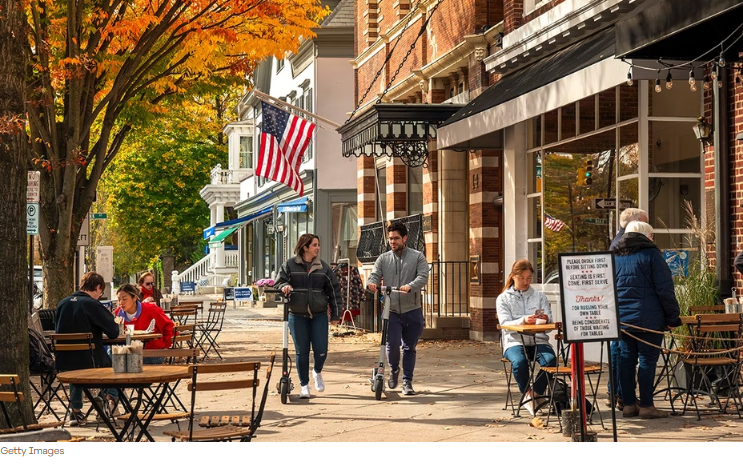
Young adults have been flocking to small towns and rural areas at the most dramatic pace in decades—and it's a trend that's not letting up anytime soon.
Since the COVID-19 pandemic, internal migration took an unexpected turn with large numbers of younger adults aged 25 to 44 flocking to these areas. And as a result, they've been fueling a small-town revival, according to Hamilton Lombard, estimates program manager of the Demographics Research Group at the University of Virginia's Weldon Cooper Center for Public Research.
The 2023 county population estimates released by the U.S. Census Bureau in spring 2024 showed that since 2020, two-thirds of growth in the population occurred in areas with fewer than 1 million residents, or in rural counties.
And despite many companies mandating a return to the office, the migration of younger adults into these areas accelerated in 2023.
"Perhaps the most striking statistic within the 2023 age estimates is the fact that since 2020, the country’s small towns and rural areas have been attracting younger adults at the highest rate in nearly a century," writes Lombard.
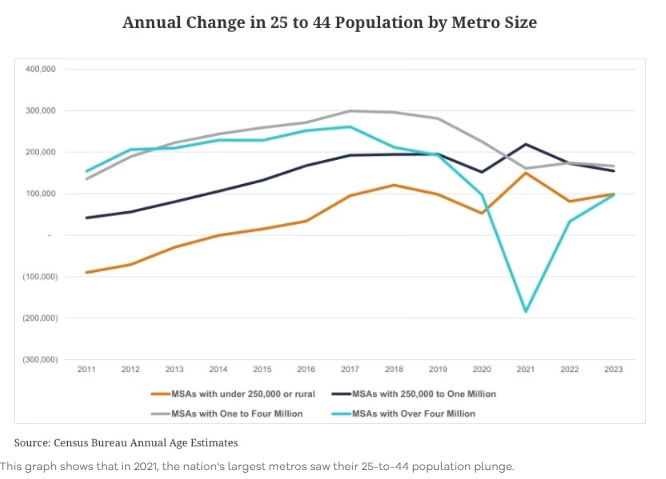
This is in stark contrast to the past decade, where 90% of this growth was concentrated in the largest metro areas with more than 4 million residents.
Starting in the late 1970s, young adults pursuing well-paying jobs in white-collar industries started fleeing areas with populations of fewer than 250,000 people in favor of places like New York City, San Francisco, and Washington, DC.
By the 1990s, this large-scale exodus caused a change in the population, where many of these areas failed to gain new residents younger than 45. That continued into the 2010s when migration into larger metros reached its highest point in more than a half-century.
"The migration of young adults from rural to urban areas caused communities to become increasingly unbalanced demographically," writes Lombard.
For example, Arlington County, VA, across the Potomac River from Washington, DC, which saw its population of young adults grow faster than in any other county within the nation's 20 largest metros, had six times as many younger residents as those over age 65.
Meanwhile, in the more rural Highland County, VA, along Virginia’s western border, the over-65 population was twice the size of residents aged 25 to 44.
As the 2010s rolled on, Lombard writes that all the census and economic data were pointing to the age divide between rural and urban areas growing ever wider.
But in 2020, just as the U.S., along with the rest of the world, was walloped by the first wave of the COVID-19 pandemic, the demographic trajectory made an unexpected U-turn.
Small, practical ways to lower your home expenses
We’re all feeling the impact of rising costs, so here are a few small, practical ways to lower your home expenses while still enjoying your space.
Even if you're not making major upgrades, small energy-saving changes can add up to noticeable savings on your utility bills. Here are a few easy adjustments to consider:
-
Seal air leaks – Use weather stripping or caulk around windows and doors to prevent drafts and improve insulation.
-
Switch to LED bulbs – They use up to 75% less energy and last significantly longer than traditional incandescent bulbs.
-
Use a programmable thermostat – Set your home’s temperature to adjust automatically, reducing energy use when you’re away or asleep.
-
Unplug devices – Many electronics continue to draw power even when turned off, so unplug chargers and appliances when not in use.
-
Wash clothes in cold water – Heating water for laundry consumes a lot of energy; switching to cold water can lead to savings without sacrificing cleanliness.
Have you tried any of these tips or made bigger energy-efficient improvements? I’d love to hear about your experience! If you’ve seen savings from these changes, feel free to share. Your name and address will not be used—just your insights to help others save, too!
How Home Equity Can Help Fuel Your Retirement
If retirement is on the horizon, now’s the time to start thinking about your next chapter. And you probably want to make sure you’re set up to feel comfortable financially to live the life you want in retirement.
What you may not realize is you likely have a hidden goldmine of cash you’re not thinking about — and that’s your home. Data from the Federal Housing Finance Agency (FHFA) shows that home values have gone up nearly 60% over the last 5 years alone (see graph below):
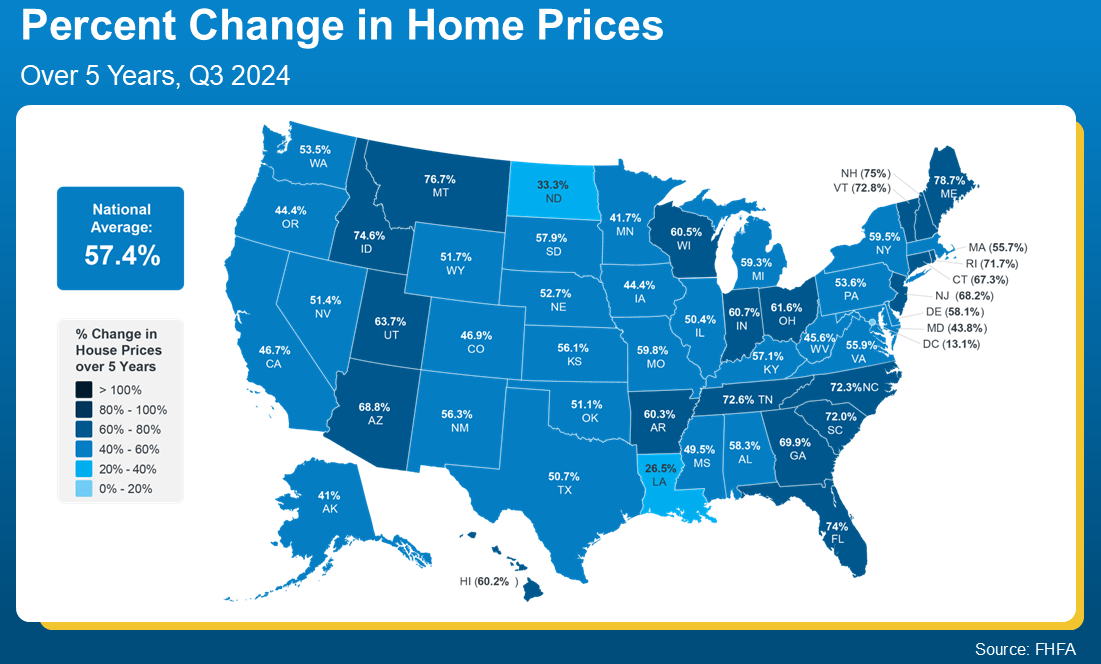
And that appreciation gave your net worth a big boost. According to Freddie Mac, over the same five-year period:
“ . . . Boomer overall wealth increased by $19 trillion, or $486,000 per household, half of which is due to house price appreciation.”
So if you’ve been in your house ever longer than that, chances are you have even more equity in your home. If you want to have access to more of the wealth you’ve built up throughout the years, it’s worth thinking about selling your house to downsize.
Why Downsizing Might Be the Right Move
Selling now so you can downsize into a smaller home, or maybe one in a more affordable area, could free up your home equity so you can use a portion of it to help you feel confident retiring. Whether you want to travel, spend more time with family, or just feel financially secure, accessing the equity in your home can make a huge difference. As Chase says:
“Retirement is an exciting time. Selling your home to take advantage of the equity or to downsize to a more affordable home can open up additional options for your future.”
Here are just a few of the ways a smaller home can fuel your retirement:
1. Cut Your Cost of Living
Data from the AARP shows the number one reason adults 50 and older move is to reduce their cost of living. Downsizing to a smaller house or relocating to a more affordable area can help you lower your monthly expenses — like utilities, property taxes, and maintenance costs.
2. Simplify Your Life
A smaller home often means less upkeep and fewer responsibilities. That can free up your time and energy to focus on the things that matter most in your retirement.
3. Boost Your Financial Flexibility
Selling your current house gives you access to your equity, turning it into cash you can use however you like. Whether it’s investing, paying off debt, or creating a financial cushion, it can open up new opportunities for your future.
The First Step Toward Your Next Chapter
If you think you may be interested in downsizing, working with a real estate agent is your next step. Your agent will help you understand how much equity to have and how you can use it. But they’ll do more than that. They’ll also help you navigate the entire process of selling your current home and finding a new one, so you can transition smoothly into a new home and a new phase of life.
Bottom Line
If you’re planning to retire in 2025, now may be the perfect time to downsize and unlock the equity you’ve built up in your home. Let’s start planning your move now, so you’re set up to make every day feel like a Saturday.
Market Trends: Why Timing Isn’t Everything
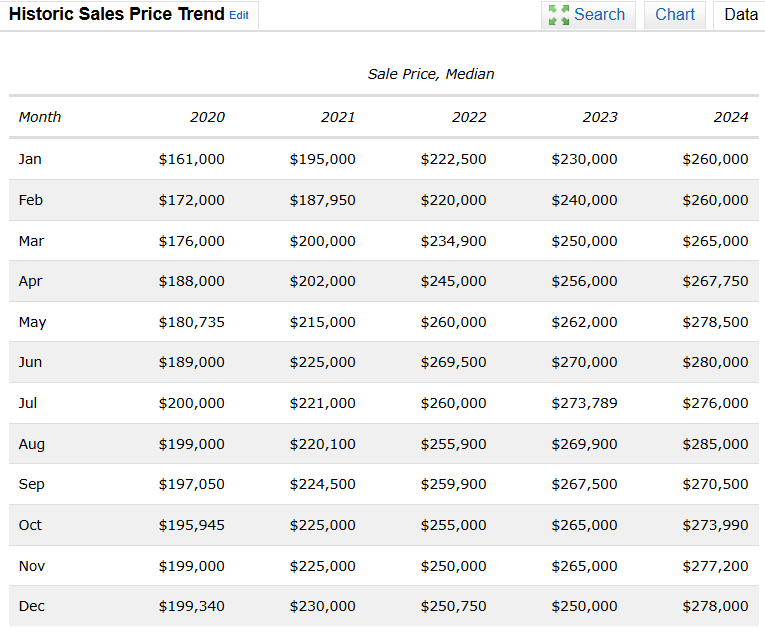
Timing the real estate market is a gamble no one can win consistently. The attached chart offers a clear example of why. Over the past five years, the Triad Real Estate market’s median home prices have steadily increased, showing a significant appreciation in value.
Consider this: in January 2020, the median home price was $161,000. Fast forward to January 2024, and that figure has risen to $260,000—a remarkable 61% increase in just four years. Month after month, year after year, the data underscores the same story: real estate remains a solid investment over time. Even more recently, from January 2023 to January 2024, we saw a $30,000 increase in the median sale price.
This upward trend proves two key points:
1. Waiting for prices to drop may mean missing out on long-term gains.
2. Even short-term fluctuations (like the slight leveling off in late 2023) are outweighed by consistent long-term growth.
For buyers, this means that entering the market sooner rather than later can help you build equity faster. For sellers, the ongoing appreciation means your home has likely gained value since you bought it—potentially more than you realize!
Remember, real estate is about your goals and timing that fits your life—not predicting the market. If you’re considering buying or selling, I’m here to help you navigate your options and make informed decisions in any market condition.
Let’s talk about how these trends impact you directly—reach out anytime!
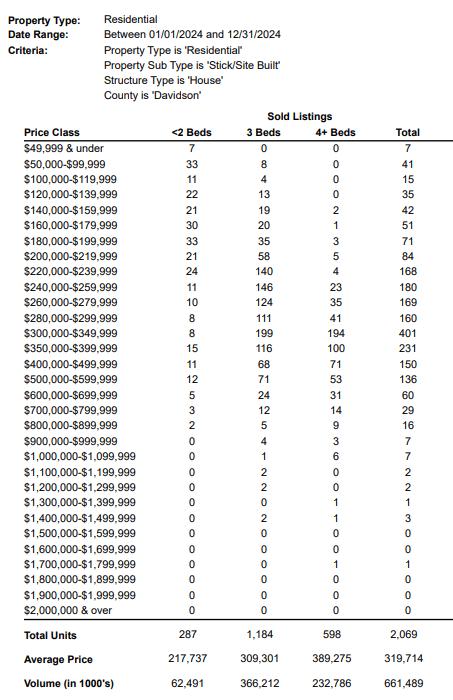
Davidson County Real Estate Recap – 2024
Davidson County continues to be a top choice for affordability, with over 2,000 homes sold and an average price of $320,000. Homes priced between $200,000 and $400,000 were in high demand, making it an exciting time for sellers in this range.
While sales of luxury homes above $600,000 were limited, the market still offers opportunities with the right approach. Thinking about selling or curious about your home’s value? Reach out—I’m here to help you navigate the market and achieve your real estate goals in 2025!
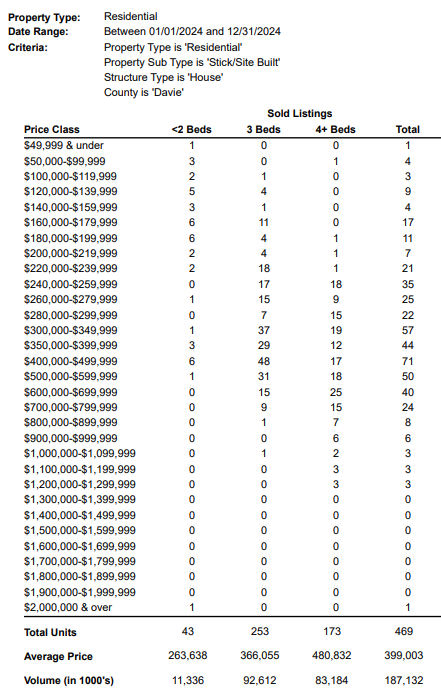
Davie County Real Estate Highlights – 2024
Davie County's real estate market held steady in 2024, with 469 homes sold and an average price of $399,003. The most active price ranges were between $300,000 and $500,000, making this a sweet spot for buyers and sellers alike.
Luxury homes above $600,000 had fewer sales, but with limited inventory in this price range, sellers have an opportunity to stand out. Wondering how your home fits into the market? Let’s connect to explore your options for 2025!
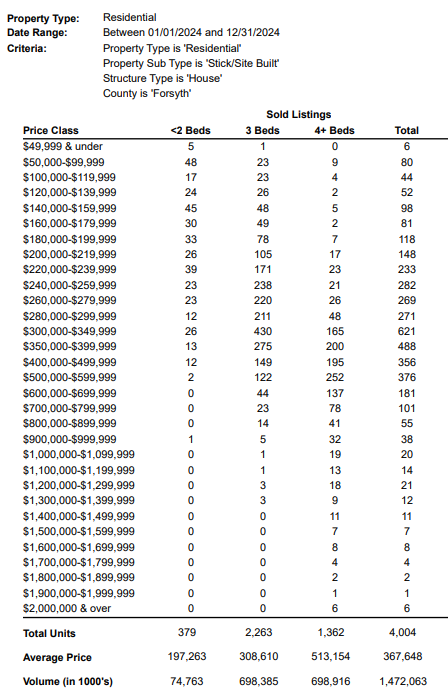
Forsyth County Real Estate Insights – 2024 Recap
Forsyth County had a fantastic year in real estate, with over 4,000 homes sold and an average sale price of nearly $368,000. The market was especially active for homes priced between $200,000 and $400,000, making it a great time for mid-range homeowners to sell.
Luxury homes priced above $600,000 saw fewer sales, but with the right marketing, there’s still an opportunity to capture buyer interest. If you’re curious about your home’s value or thinking of selling in 2025, reach out—I’d love to help!
Celebrating the Season in Our Homes
The holidays remind us of the joy and memories our homes hold, especially when they're filled with the sounds of Christmas music! As a real estate agent, I love helping people find homes where they can create lasting traditions.
What’s your favorite Christmas song that makes your home feel magical this time of year? Share it in the comments below!
Local Holiday Events to Enjoy With Family and Friends
The holiday season is here, and for many of us, that means welcoming family and friends into town. If you're looking for fun and festive ways to celebrate, Winston-Salem has so much to offer! From timeless traditions to unique local events, there's something for everyone to enjoy.
Here are a few events you won't want to miss this holiday season:
-
Tanglewood Festival of Lights: Starting 11/19 at 6:00 PM, this beloved drive-through light display is a holiday favorite for all ages.
-
Piedmont Craftsmen's Fair: On Saturday, 11/23, and Sunday, 11/24, explore one-of-a-kind handmade gifts and support local artisans.
-
Candle Tea: Experience this cherished Moravian tradition. Many local churches host Candle Tea events, so find your favorite spot to attend.
-
Reynolda Village Holiday Stroll: Enjoy the charm of Reynolda Village on 11/23 with festive lights, shopping, and seasonal treats.
-
Joy of Christmas Evening Tours: On 11/29 at 6:30 PM, take a magical evening tour filled with holiday cheer.
-
Winston-Salem Ambassadors Holiday Parade: Mark your calendars for 12/7 at 5:00 PM to enjoy the spirit of the season at this lively parade.
These events are perfect for creating special memories with your loved ones. Whether you’re embracing the twinkle of holiday lights, shopping for unique gifts, or soaking in local traditions, this season is all about connecting and celebrating together.
Have fun exploring, and happy holidays!