Area Real Estate News & Market Trends

You’ll find our blog to be a wealth of information, covering everything from local market statistics and home values to community happenings. That’s because we care about the community and want to help you find your place in it. Please reach out if you have any questions at all. We’d love to talk with you!

Feb. 5, 2024

Triad NC Real Estate Market Inventory Update

More homes are available for sale. Interest rates are staying steady. If you're thinking about moving to a bigger or smaller place, now's a good time. Don't wait too long, or your home could be hard to find among all the other homes that are for sale.


Posted in Market Updates
Feb. 5, 2024

Triad NC Real Estate January Market Update


Triad NC Real Estate Market January 2024

Homes sold were up slightly from January 2023.  December -- a month full of holiday activities.

Buyers who are active in the market in the last quarter are great buyers because they need a home and

today. 

Thank you to all the sellers who put their home on the market.

during the holidays.  


Posted in Market Updates
Feb. 2, 2024

The Top Benefits of Buying a Multi-Generational Home

The Top Benefits of Buying a Multi-Generational Home

Has the idea of sharing a home with loved ones like your grandparents, parents, or other relatives crossed your mind? If so, you’re not alone. More buyers are choosing to go this route and buy a multi-generational home. Here’s a look at some of the top reasons why, to see if a home like this may be right for you too.

Why Buyers Are Opting for Multi-Generational Living

According to the National Association of Realtors (NAR), two of the top reasons buyers are opting for multi-generational homes today have to do with affordability (see graph below):


First-time buyers are focused most on cost savings – with 28% saying this was a key reason for them. By pooling their resources with others, they can share financial responsibilities like mortgage payments, utilities, and more to make homeownership more affordable. This is especially helpful for those first-time homebuyers who may be finding it tough to afford a home on their own in today’s market.

Buyers are also turning to multi-generational homes so they can more easily afford their dream home. Both first-time (28%) and repeat buyers (18%) chose to live with others so they could buy a larger home. When everyone chips in and combines their incomes, that big dream home with more space could be more within reach.

But multi-generational living isn’t just about the financial side of things. According to the same study from NAR, 23% of repeat buyers chose to buy a multi-generational home to make it easier to care for an aging parent. Many older adults want to age in place and a multi-generational home can help make that possible. For those older adults, it gives them an opportunity to maintain their quality of life while being surrounded by their loved ones. As Axios explains:

“Financial concerns and caregiving needs are two of the major reasons people live with their parents (and parents' parents).”

Lean on an Expert

Finding the perfect multi-generational home isn’t as simple as shopping for a regular house. That’s because there are more people with even more opinions and needs to be considered. It's like solving a puzzle, and the pieces need to fit just right.

So if you're interested in the many benefits multi-generational living offers, partner with a local real estate agent who has the expertise to help.

Bottom Line

Whether your motives are financial or focused on the people you’ll share your home with, buying a multi-generational home may make sense for you. If you’re interested in learning more, let’s connect.

Posted in Homeownership
Feb. 2, 2024

Will a Silver Tsunami Change the 2024 Housing Market?

Will a Silver Tsunami Change the 2024 Housing Market?

Have you ever heard the term “Silver Tsunami” and wondered what it's all about? If so, that might be because there’s been lot of talk about it online recently. Let's dive into what it is and why it won't drastically impact the housing market.

What Does Silver Tsunami Mean?

A recent article from HousingWire calls it:

“. . . a colloquialism referring to aging Americans changing their housing arrangements to accommodate aging . . .”

The thought is that as baby boomers grow older, a significant number will start downsizing their homes. Considering how large that generation is, if these moves happened in a big wave, it would affect the housing market by causing a significant uptick in the number of larger homes for sale. That influx of homes coming onto the market would impact the balance of supply and demand and more.

The concept makes sense in theory, but will it happen? And if so, when?

Why It Won’t Have a Huge Impact on the Housing Market in 2024

Experts say, so far, a silver tsunami hasn’t happened – and it probably won't anytime soon. According to that same article from HousingWire:

“. . . the silver tsunami’s transformative potential for the U.S. housing market has not yet materialized in any meaningful way, and few expect it to anytime soon.”

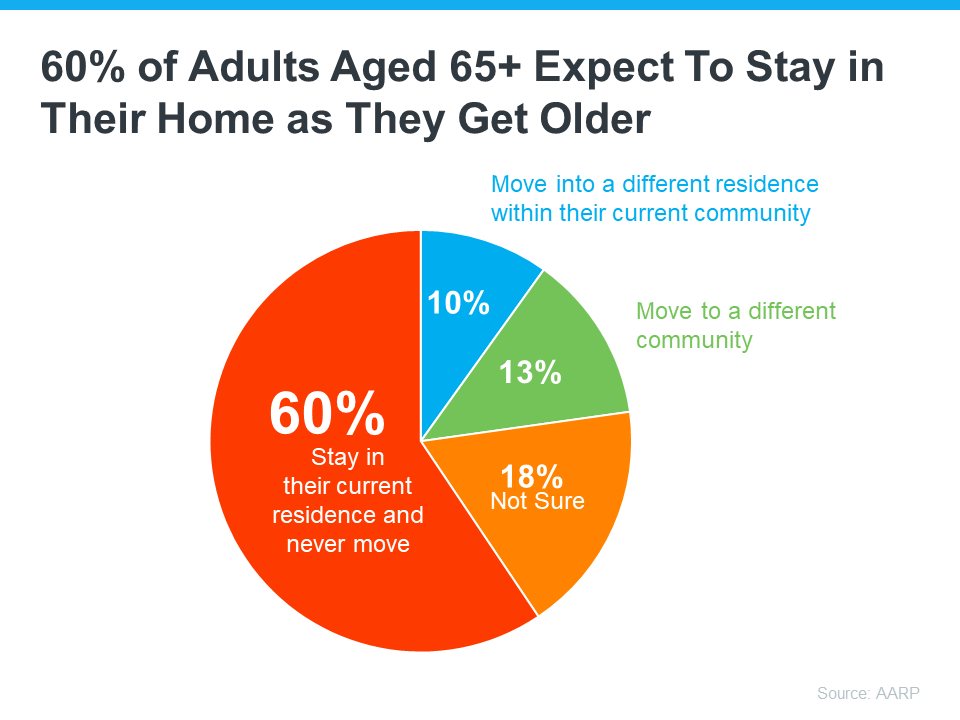
Here’s just one reason why. Many baby boomers don’t want to move. Data from the AARP shows over half of the surveyed adults ages 65 and up plan to stay put and age in place in their current home rather than move (see chart below):


Clearly, not every baby boomer is planning to sell or move – and even those who do won’t do it all at once. Instead, it will be more gradual, happening slowly over time. As Mark Fleming, Chief Economist at First Americansays:

Demographics are never a tsunami. The baby boomer generation is almost two decades of births. That means they're going to take about two decades to work their way through.”

Bottom Line

If you’re worried about a Silver Tsunami shaking up the housing market, don’t be. Any impact from baby boomers moving will be gradual over many years. Fleming sums it up best:


“Demographic trends, they don't tsunami. They trickle.”

Posted in Homeownership
Feb. 1, 2024

Are More Homeowners Selling as Mortgage Rates Come Down?

Are More Homeowners Selling as Mortgage Rates Come Down?

If you’re looking to buy a home, the recent downward trend in mortgage rates is good news because it helps with affordability. But there’s another way this benefits you – it may inspire more homeowners to put their houses up for sale.

The Mortgage Rate Lock-In Effect

Over the past year, one factor that’s really limited the options for your move is how few homes were on the market. That’s because many homeowners chose to delay their plans to sell once mortgage rates went up. An article from Freddie Mac explains:

The lack of housing supply was partly driven by the rate lock-in effect. . . . With higher rates, the incentive for existing homeowners to list their property and move to a new house has greatly diminished, leaving them rate locked.”

These homeowners decided to stay put and keep their current lower mortgage rate, rather than move and take on a higher one on their next home.

Early Signs Show Those Homeowners Are Ready To Move Again

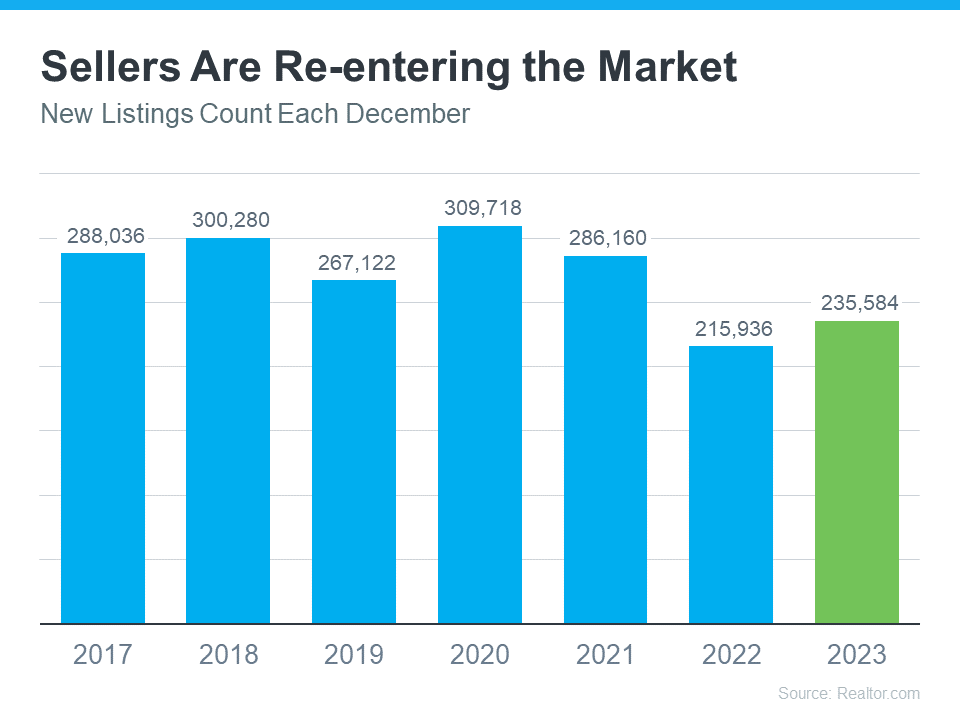
According to the latest data from Realtor.com, there were more homeowners putting their houses up for sale, known in the industry as new listings, in December 2023 compared to December 2022 (see graph below):


Here's why this is so significant. Typically, activity in the housing market cools down in the later months of the year as some sellers choose to delay their moves until January rolls around.

This is the first time since 2020 that we’ve seen an uptick in new listings this time of year. This could be a signal that the rate lock-in effect is easing a bit in response to lower rates.

What This Means for You

While there isn’t going to suddenly be an influx of options for your home search, it does mean more sellers may be deciding to list. According to a recent article from the Joint Center for Housing Studies (JCHS):

A reduction in interest rates could alleviate the lock-in effect and help lift homeowner mobility. Indeed, interest rates have recently declined, falling by a full percentage point from October to November 2023 . . . Further decreases would reduce the barrier to moving and give homeowners looking to sell a newfound sense of urgency . . .”

And that means you may see more homes come onto the market to give you more fresh options to choose from.

Bottom Line

As mortgage rates come down, more sellers may re-enter the market – that gives you an opportunity to find the home you’re looking for. Let’s connect so you’ve got a local expert on your side who’ll help you stay on top of the latest listings in our area.

Posted in Mortgages
Feb. 1, 2024

2 of the Factors That Impact Mortgage Rates

2 of the Factors That Impact Mortgage Rates


If you’re looking to buy a home, you’ve probably been paying close attention to mortgage rates. Over the last couple of years, they hit record lows, rose dramatically, and are now dropping back down a bit. Ever wonder why?

The answer is complicated because there’s a lot that can influence mortgage rates. Here are just a few of the most impactful factors at play.

Inflation and the Federal Reserve

The Federal Reserve (Fed) doesn’t directly determine mortgage rates. But the Fed does move the Federal Funds Rate up or down in response to what’s happening with inflation, the economy, employment rates, and more. As that happens, mortgage rates tend to respond. Business Insider explains:

The Federal Reserve slows inflation by raising the federal funds rate, which can indirectly impact mortgages. High inflation and investor expectations of more Fed rate hikes can push mortgage rates up. If investors believe the Fed may cut rates and inflation is decelerating, mortgage rates will typically trend down.”

Over the last couple of years, the Fed raised the Federal Fund Rate to try to fight inflation and, as that happened, mortgage rates jumped up, too. Fortunately, the expert outlook for inflation and mortgage rates is that both should become more favorable over the course of the year. As Danielle Hale, Chief Economist at Realtor.comsays:

“[M]ortgage rates will continue to ease in 2024 as inflation improves . . .”

There’s even talk the Fed may actually cut the Fed Funds Rate this year because inflation is cooling, even though it’s not yet back to their ideal target.

The 10-Year Treasury Yield

Additionally, mortgage companies look at the 10-Year Treasury Yield to decide how much interest to charge on home loans. If the yield goes up, mortgage rates usually go up, too. The opposite is also true. According to Investopedia:

“One frequently used government bond benchmark to which mortgage lenders often peg their interest rates is the 10-year Treasury bond yield.”

Historically, the spread between the 10-Year Treasury Yield and the 30-year fixed mortgage rate has been fairly consistent, but that’s not the case recently. That means, there’s room for mortgage rates to come down. So, keeping an eye on which way the treasury yield is trending can give experts an idea of where mortgage rates may head next.

Bottom Line

With the Fed meeting later this week, experts in the industry will be keeping a close watch to see what they decide and what impact it’ll have on the economy. To navigate any mortgage rate changes and their impact on your moving plans, it’s best to have a team of professionals on your side.

Posted in Mortgages
Jan. 31, 2024

How to Prevent and Remove Ice Dams from Your Roof

How to Prevent and Remove Ice Dams from Your Roof

Ice dams form when snow that has accumulated on the roof melts and runs down to the gutter system. As the meltwater runs into the gutter system, it cools and begins to freeze. Gradually, ice builds up in the gutter, forming an ice dam. When this occurs, the weight of the ice can damage the gutter system.

Additionally, the ice dam prevents water from draining away from the home, causing water to seep through the shingles, where it freezes, expands, and ultimately loosens the shingles. Once this happens, the water can work its way into the roof, causing extensive water damage, wood rot, and mold growth. Here's how to prevent and remove ice dams from your roof.

What Is an Ice Dam and How Do They Form?

An ice dam is essentially a block of ice that forms in the gutter system of the home. As it grows, it prevents the gutter system from draining water away from the house. It can also damage the roof, put excessive weight on the gutter system, and lead to water damage and wood rot.

Ice dams form because of a difference in temperature between the roof and the eaves. Usually, a third of all heat that escapes from the home passes through the attic before exiting through the roof. This heat increases the temperature of the roof, causing the snow to melt. However, the temperature of the eaves is typically lower than the roof's temperature, so the meltwater flows into the eaves and freezes, gradually building to the point of becoming an ice dam.

If there is a significant temperature difference between the roof and the eaves, ice damming will likely occur. The greater the difference, the higher the chance of ice dam formation. With this in mind, learning how to prevent and remove ice dams is important.

Safety Considerations

When dealing with an existing ice dam, DIYers and professionals must be careful to avoid damaging the roof or being injured during removal.

WARNING

Large chunks of ice or hanging icicles can fall from the roof during ice dam removal, so it isn't a good idea to remove an ice dam while standing on the ground. There is also a substantial risk of falling for those who choose to work on the roof or a ladder.

The person breaking up the ice dam should work from a safe vantage point on the roof, ensuring they are securely connected to fall-arrest equipment to prevent injury if they slip or trip. Additionally, DIYers should never substitute rock salt for calcium chloride when melting the ice dam. While calcium chloride is safe for roof shingles and vegetation, rock salt poses a risk to the home and plant life.

3 Ways to Remove Ice Dams

1. Melt Ice Dams with Calcium Chloride

Using a chemical compound to melt ice dams is an excellent way to remove this problem, though it's essential to find products that are safe for use on shingles and around vegetation. With this in mind, the DIYer should never use rock salt for this purpose. Instead, use calcium chloride or a similar ice-melting product.

Fill a long tube sock or pantyhose legging with calcium chloride, tie off the ends with string, and hang each sock over the dam. You can use a roof rake or a similar tool to position the sock to hang an inch or two over the roof edge. As the calcium chloride melts the ice, it creates a channel through the dam, allowing any additional water to flow freely. However, the channels may fill up quickly if there is further snowfall in the following days, so it's important to keep the roof clear of snow with a roof rake while the ice dam is melting.

2. Melt Ice Dams with Hot Water or Steam

Hot water is one of the best ways to remove an ice dam. There is little risk of the water harming the vegetation or roofing shingles, but this process can take a while for a DIYer to complete. Start by connecting a garden hose to the hot water outlet for the laundry tub or washing machine. Carry the garden hose up to the ice dam and begin gradually melting the ice dam with the hot water. Avoid directing the pressurized water directly against the shingles, as this can cause the shingles to lift and pull away from the roof.

Homeowners can hire professionals to melt the ice dam with hot water or by using commercial steaming equipment. Pros have the knowledge and experience to eliminate the ice dam quickly and efficiently while following detailed safety protocols to avoid injury.

3. Break Up the Ice Dam

While it is possible to physically break up an ice dam by carefully using a mallet and chisel, this method is significantly more dangerous than attempting to melt the ice dam. This method isn't suggested for DIYers because they may damage the roof or gutter system while banging away with a hammer, leading to more problems in the future. Additionally, breaking an ice dam can cause large icicles, sheets of ice, and chunks of ice to slide or drop from the roof, putting the DIYer and anyone nearby at risk.

If breaking up the ice dam seems like the best option, then it's best to call a professional crew to handle the job. Pros have the experience, skills, and proper tools readily available to tackle this type of work, so there is less risk of injury or damage to the property.

How to Prevent Ice Dams

Rake Snow Off the Roof

One of the best ways to stop ice from forming on a driveway is to shovel the driveway after it snows. Similarly, DIYers can prevent ice dams from forming by removing the snow from the roof. If no snow is on the roof, it can't melt and create ice dams.


Use a lightweight roof rake with a long extension to safely rake snow off the roof. Ideally, the extension will be long enough for the DIYer to work from the ground while remaining far enough away from the home to avoid the snow and ice as it is pulled off the roof. After removing the snow, climb to the eaves and clear any leaves or branches that may have accumulated in the gutter system.

Posted in Household tips
Jan. 31, 2024

How to Use Ice Melt to Safely Clear Your Home's Walkways

How to Use Ice Melt to Safely Clear Your Home's Walkways

When winter weather hits, the temperatures drop, rain turns to snow, and ice begins to form wherever there is standing water. To get through the colder months without injury, it's important to stay on top of home maintenance tasks, like shoveling the driveway or using ice melt to remedy slippery surfaces leading up to the home.

Ideally, homeowners should apply ice melt just before a snowfall, spreading a light amount of de-icer to prevent snow and ice from bonding to the pavement. Warm temperatures during the day can cause a light thaw, melting the top layers of snow. When night hits, the temperatures plummet and the melted snow freezes, forming a sheet of ice under the snow.

To help prevent this, homeowners should keep the walkways clear and use a small amount of ice melt to stop ice from forming. Use this guide to find out more about what ice melt is, how it works, and how to use ice melt to safely clear your home's walkways.

What Is Ice Melt and How Does It Work?

Ice melt is essentially a type of chemical compound designed to melt ice. This can be accomplished in two ways: By lowering the freezing point of water, causing it to melt at a lower temperature, or by absorbing the sun's heat and using it to melt ice into a liquid brine. The method through which the ice melt works depends on whether the chemical composition is intended for an exothermic or endothermic reaction.

Typically, ice melt products will contain sodium chloride, calcium chloride, magnesium chloride, potassium chloride, or urea. As long as ice melt is used correctly and in safe quantities, it is an effective solution for melting icy surfaces. However, if this product is not used properly, it could damage nearby vegetation, seep in the local groundwater, or put kids and pets at risk. Make sure to read and follow the directions provided by the manufacturer to ensure you are using the product correctly.

Types of Ice Melt

There are several types of ice melt, which can be differentiated based on the type of chemical reaction, as well as the form of the ice melt. Common options include pellets, flakes, liquids, exothermic, and endothermic ice melts.

  • Pellets are one of the most popular ice melt forms because they are easy to apply over a broad area with a lawn fertilizer spreader or a simple scoop.
  • Flakes are similar to pellets in that they are easy to apply, but flakes are smaller in size and don't generally increase traction on the icy surface.
  • Liquids typically come in a ready-to-use spray bottle, allowing homeowners to simply spray the icy surface. This method of deicing the walkway doesn't increase traction on the ice, but it does spread easily over the affected area to rapidly melt the ice.
  • Exothermic ice melt products are fast working and effective at a broader range of temperatures than endothermic deicers. This type of ice melt lowers the freezing point of water, causing the ice to melt at lower temperatures.
  • Endothermic ice melt products are better for mild winter conditions because they rely on the heat from the sun to melt the surrounding ice. The ice melt pellets or flakes absorb the sun's heat, then release the heat to melt the nearby ice.

Safety Considerations

Before using an ice melt product to get rid of the ice around the home, it's important to have a basic understanding of the potential risks to the home, pets, and kids. Ice melt products are not safe for ingestion, so it's necessary to store the ice melt in a safe location away from kids and pets. When walking pets, try to keep them away from areas that have been treated with ice melt.

If pets do encounter ice melts, it can get embedded in their paws, causing mild pain and irritation. When pets attempt to lick away the ice melt, they can ingest this chemical compound, leading to nausea, vomiting, and diarrhea. Similar symptoms can be seen in children who have consumed small amounts of ice melt products. If you believe someone in the household has swallowed ice melt, contact the Poison Control Center immediately.


Additionally, ice melt products may get tracked into the home, where they can make indoor surfaces dangerously slippery and cause damage to the floors. It's recommended to have at least one thick mat at the door for residents and guests to wipe their feet before entering. Homeowners with pets may also want to have a simple rinse basin near the door so that they can rinse off pets' feet before entering the home.

Posted in Household tips
Jan. 30, 2024

What Is Rightsizing, and Is It Different from Downsizing?

What Is Rightsizing, and Is It Different from Downsizing?

You’re probably familiar with the terms “starter home” and “dream home.” The first is typically a small, affordable home you start with before you grow into a larger home. Eventually, most homeowners downsize, buying a smaller home for later stages in life. But have you heard of rightsizing?

“Rightsizing a home does not define increasing or decreasing the size of your home. You are adjusting your home size to better fit your needs,” says Jessica Duncan, a realtor with Better Homes and Gardens Real Estate Main Street Properties. 

Like the name implies, rightsizing is all about finding a home that makes sense for you at a given point in time. “Sometimes, this means you need a larger home or even a home with about the same square footage but a layout that better fits your current lifestyle and needs,” Duncan adds. 

In this guide, experts weigh in on how to choose a home while rightsizing. 

What Is Rightsizing?

When it comes to rightsizing, the definition is all in the name. It’s about finding a home that is the correct size for your situation.

“Rightsizing is a process of thoughtful discernment, and you can’t start too soon,” says Edward Sattler of the Better Homes & Gardens Real Estate Green Team. “Downsizing is just numbers, big to small, and you might not get what you’d hoped for.” 

Unlike downsizing, rightsizing isn’t necessarily about going smaller or less expensive. Agent Michael Yehuda of Coldwell Banker Warburg says downsizing is just a form of rightsizing.  “Downsizing is a specific form of rightsizing that emphasizes a reduction in physical space and possessions, often driven by simplification and financial considerations,” he says. “Rightsizing, on the other hand, is a more comprehensive and flexible approach that involves adjusting living conditions to optimize for various aspects of life, including work, health, and family dynamics.”

You’re not losing anything, not giving anything up, when you rightsize. You gain. Rightsize is more. Rightsize is better living. You’ll know when it feels right in your gut.

--EDWARD SATTLER

When Is It Time to Rightsize?

The perfect time to rightsize your home is when you feel your living situation needs to catch up with your lifestyle. “If you are contemplating the decision to rightsize your living space, consider the lifestyle you want and how your new home can facilitate those dreams,” Duncan says. 

A 2023 survey by Opendoor shows many Americans are now prioritizing a way of life that leads to simpler living, with less clutter and square footage.

“According to Opendoor’s 2023 survey on simple-sizing, health concerns (57%) became the biggest factor driving their decision to simple-size, which can be especially important for seniors and retirees,” Patchen says. 

The benefits of rightsizing can be huge. While it doesn’t always mean saving money, it can mean more freedom. “Rightsizing your home can have a huge emotional impact on your well-being,” Duncan says. “It can reduce stress, free up more time, or even provide a space for everything to create less clutter in your life—all three of these effects can improve your psychological well-being.”

Rightsizing for Retirees

For many, rightsizing comes at the same stage in life as downsizing. Individuals reach a point in later life when they no longer need as much room as they did to raise a family or work from home, for instance. 

“Rightsizing for retirees can have many benefits, including lower payments, less maintenance expenses, or just providing a home that fits their current lifestyle,” Duncan says. “Their life has changed in many ways. The kids have moved out of the house, and the need for as many bedrooms may have left with the kids.” 

Rightsizing isn’t just about the need for less space. It can also be about a home that requires less attention. “Many retirees dream of traveling more often,” Duncan adds. “Rightsizing to a condo or community that includes yard maintenance, exterior maintenance, and more security over your home while traveling” is attractive.

What to Look for in a Home

As you prepare to look for a home better sized for your needs, consider not just square footage but a range of wishlist items like you might in any home search. 

“Think about the location you want to be in, the time you want to spend on maintenance, and your need to achieve these dreams,” Duncan says.

The best advice I would give to someone looking to rightsize their home is to think about the life you want, not the life you have right now. Dream about what the day-to-day would be like and how the new home can facilitate these dreams.

— JESSICA DUNCAN

You might decide you want a smaller home within walking distance of shops and restaurants, or maybe your new retirement means you have time to maintain a larger yard or garden

Sattler suggests considering how a different home might use some of your assets. “How do you want to allocate resources: your time, your money, your emotional and physical and spiritual energies?” he says. 

“Consider the benefits of a quieter life: For many buyers, simplifying means moving away from the density of big cities. According to Opendoor’s 2022 Hottest ZIP Codes report, one-third of people across the U.S. said they would relocate for a lifestyle change, whether to be closer to outdoor and recreational activities or to join a close-knit community,” Patchen says. 


Similarly, purchasing a smaller home near certain amenities can be an excellent way to rightsize. Patchen says 62% of Americans say they spend more time outside on their property or near various parks following the pandemic. 

Posted in Homeownership
Jan. 30, 2024

The Top 10 Features Home Buyers Searched for In 2023, According to Zillow

The Top 10 Features Home Buyers Searched for In 2023


If you were looking for a house or condo to purchase on Zillow this year, it's likely that “garage” was one of the phrases you typed into your search. According to the real estate website, that was the top term of the 250 billion searches by home seekers in the past year, indicating buyers are prioritizing practicality and convenience.

Artificial intelligence has enhanced Zillow’s search capabilities in the past months, allowing users to pose conversational questions to find their dream homes. For example, you can ask, “I’m looking for a cozy house with a screened-in porch,” and Zillow will show you listings for properties with those exact details. Zillow can also notify users when new listings come up with their specific requests.

“Natural language search gives us this ability to look at unique and highly local trends across the U.S.,” said Nicholas Stevens, vice president of product, artificial intelligence at Zillow. “This lets us go deeper than the typical search filters, helping us better show shoppers homes with the features they really want.” 

In addition to garage, the other top search terms (both practical and luxury) include:

  • Backyard
  • Fireplace
  • Walk-in closet
  • Patio
  • Open floor plan
  • Pool
  • Family room
  • Basement
  • Granite counters
Posted in Homeownership