Area Real Estate News & Market Trends

You’ll find our blog to be a wealth of information, covering everything from local market statistics and home values to community happenings. That’s because we care about the community and want to help you find your place in it. Please reach out if you have any questions at all. We’d love to talk with you!

Jan. 29, 2024

Do You Need a Climate-Controlled Unit?

Do You Need a Climate-Controlled Unit?

Before signing a lease, decide if you need a climate-controlled storage unit. Understanding the difference between a climate-controlled unit and a regular one will help you determine what you feel comfortable putting into storage. A climate-controlled unit is exactly as it sounds, meaning it maintains steady temperature (typically between 55 and 85 degrees Fahrenheit) and humidity (roughly 50%) levels so your things are better protected against mold, mildew, and potential pests.

Of course, this means paying a higher price compared to a standard storage unit. Companies can charge as low as 15% or as high as 50% more for the climate-control feature, with overall rents varying greatly depending on location. Unless you live in a predictably temperate climate year-round, it’s smart to shell out the extra money if you need to store any of the following items:

  • Clothing and linens
  • Antiques and artwork
  • Paper, photographs, and books
  • Electronics and media such as DVDs
  • Musical instruments and sports equipment
  • Collectibles such as comic books and vinyl records
  • Furniture and any items made of wood, leather, wicker, or upholstery
  • Anything else that can be damaged by extreme heat, cold, or humidity such as your wine collection, beauty products, or medical supplies


Even if you plan to use a storage unit for things that don’t necessarily need climate control, like dish sets or outdoor furniture, you may want to consider it anyway for added peace of mind. Regardless of which type you choose, below are the things you should never stash away in a storage unit, even on a short-term basis.

Posted in Household tips
Jan. 29, 2024

8 Things You Should Never Put in a Storage Unit

8 Things You Should Never Put in a Storage Unit

Leasing a self-storage unit can be a smart storage solution in many instances. Whether you're organizing small business inventory, have a window of time between selling and buying a home, or living in a small apartment with no space to spare, a storage unit can come in handy. The recurring monthly cost is usually a small price to pay for the stress it saves, especially if it’s only a short-term solution.

If you're considering renting a storage unit, there are a few guidelines to be aware of. Like garagesattics, and basements, there are items you should not keep in a storage unit. There typically are actual rules about what can and cannot be stored in any given storage facility, so it's a good idea to look into that before signing a lease. Most companies follow these guidelines nationwide and, although some are put in place to lessen their liability, many actually help protect your things as well. And then there are items that, while not necessarily banned by the facility directly, are wise to keep out it.

1. Any Food

Leaving any kind of food in a unit is essentially inviting creepy critters to come for dinner. Storing anything perishable is out of the question and, even if your particular facility isn’t strict on it, pantry non-perishables are not much better. Canned goods can explode, boxes or bags can easily be chewed through, and food can eventually rot, causing an odor issue in the building.

Speaking of odor, even pleasant smells should be left out of your storage unit. The strong scent of things like candles, perfumes, incense, and soap can also attract pests and inevitably bother your storage neighbors’ noses.

2. Anything Damp

Say you’re using a storage unit to house your kayak or stand up paddleboard in between trips to the lake. Ensure that they’re completely dry before locking up so you don’t subject both your expensive equipment (as well as everything else in the unit) to mold and mildew. If you’re moving items in on a rainy day, either be prepared with towels to thoroughly wipe them down or leave them out of the storage unit altogether.

3. Toxic or Flammable Materials

This is another category that’s forbidden by virtually every storage company, for good reason. You can’t use a self-storage unit to store anything that could leak harmful fumes or potentially start a fire. Fireworks and other explosives are self-explanatory, but even common household items, like paint, propane, gasoline tanks, fertilizer, and car batteries, are off-limits. Likewise, leave out cleaning agents such as bleach, aerosols such as cans of hairspray, and nail polish removers containing acetone. Hazardous materials should ideally be kept in a well-ventilated area, something a storage unit most definitely is not.

4. Weapons

Along the same precarious lines, firearms, ammunition, and any other type of volatile weapon should not be stored in a storage unit for safety and security reasons. If someone defaults on their rent payment (by just 30 days in some states), the storage facility has the authority to sell the unit contents in an auction and weapons can easily fall into the wrong hands.

5. Irreplaceable or Valuable Items

Things like letters your grandfather wrote to your grandmother while serving overseas, your childhood photo albums, or the deed to your current home should never be put in a storage unit. Although it’s nerve-wracking to think about, a burglary can occur or, worse, a fire in the building could destroy everything you have stored. Anything that cannot be replaced or duplicated, as well as any original and important documents, should be kept close to you or in a fireproof safe at all times.

6. Spare Tires

You might be disappointed to learn this, especially if you’re short on space in your garage or basement to store your spares. Tires are usually prohibited from all storage units for two reasons. The first, although rare, is the threat of a tire fire. Second, there is a costly fee that storage companies have to pay to dispose of tires either left behind by a tenant or forfeited due to non-payment. 

7. Unregistered, Uninsured, or Inoperable Vehicles

Self-storage units—specifically climate-controlled units—can be an optimal method to store a car, boat, RV or camper, and any other mode of transportation for either a long or short-term period. Military deployments, car show cruise-ins, or strict HOA parking rules are just a few scenarios that could warrant the need to store a vehicle in a self-storage unit. What you cannot do, however, is store one that is not currently working or insured and is not registered to the person listed on the storage unit lease agreement.

8. Clutter


Lastly, you should never keep clutter in a storage unit because that means you're needlessly paying a fee every month—and potentially for years on end. Take the time to pare down your stuff before you decide to invest in a storage unit or, if you already have one, clear it out as much as possible. You may find that you still need a self-storage unit but you may also be able to downsize, reducing your monthly bill, or use the newfound space to hold seasonal items, creating more room in your home.

Posted in Household tips
Jan. 26, 2024

Why Homeowners Are Thankful They Own

Why Homeowners Are Thankful They Own

Countless people have set out on the exciting journey of homeownership. Ask around and you’ll find the vast majority are thankful they took the leap and bought a home. But why? It’s because of the many emotional and lifestyle benefits that come with being a homeowner.

So, if you’re trying to decide if you want to rent or buy a home, here are just a few of the many benefits you could look forward to if you buy.

It’s a Safe Haven

Owning a home goes beyond just having a roof over your head. It provides a sense of security and safety. In fact, in a survey from Fannie Mae, respondents say “having a sense of privacy and security” is one of the top reasons homeownership is preferred to renting. And in a different Fannie Mae survey, “living in a place where you and your family feels safe” is another one of the top benefits of homeownership.

Your home is a place where you can truly relax and unwind. Knowing that you have a sanctuary to return to at the end of the day is a great source of comfort.

It’s a Canvas for Self-Expression

For many homeowners, their home is a reflection of who they are. The National Association of Realtors (NAR), says:

“The home is yours. You can decorate any way you want and choose the types of upgrades and new amenities that appeal to your lifestyle.

From the color of the front door to the art hanging on the walls, every detail contributes to a unique expression of personal style. Put simply, owning a home gives you the freedom to make changes and improvements that resonate with your personality.

It Helps You Feel More Connected to the Community

Stability is another cornerstone of homeownership. The longer you stay put, the more emotionally connected you are to your community. For example, if your neighborhood does cook-outs, block parties, or other events, you’ll feel more engaged and probably build meaningful relationships with those around you. As NAR states:

Remaining in one neighborhood for several years allows you and your family time to build long-lasting relationships within the community.”

The sense of community where you can make life-long friends helps give you more stability and predictability than you’d have if you move each time a rental lease renews.

Its Where Lifelong Memories Are Made

Not to mention, your home is where you’ll make many memories. It’s a backdrop for the stories of your life. Celebrating milestones, hosting gatherings, and building a treasure trove of special moments within the walls of your home is a heartwarming experience to be thankful for.

Bottom Line

As you start thinking about buying a home, remember why so many people are glad they did. Homeownership isn’t just a financial decision. It’s about having a stable place where you can make lasting memories. If you're thinking of buying a home and want advice, let's chat.

Posted in Homeownership
Jan. 26, 2024

Are the Top 3 Housing Market Questions on Your Mind?

Are the Top 3 Housing Market Questions on Your Mind?

When it comes to what’s happening in the housing market, there’s a lot of confusion going around right now. You may hear one thing in conversation with your friends, see something totally different on the news, and read something on social media that contradicts both of those thoughts. And, if you’re thinking about making a move, that can leave you with a lot of lingering questions. That’s where a trusted local real estate agent comes in.

Here are the top 3 questions people are asking about today’s housing market, and the data to help answer them.

1. What’s Next for Mortgage Rates?

Mortgage rates are higher than they’ve been in recent years. And, if you’re looking to buy a home, that impacts how much you can afford. That’s why so many buyers want to know what’s ahead for mortgage rates. The answer to that question is: no one can say for certain, but here’s what we know based on historical trends.

There’s a long-standing relationship between mortgage rates and inflation. Basically, when inflation is high, mortgage rates tend to follow suit. Over the past year, inflation was up, so mortgage rates were as well. But inflation is easing now. And this is why the Federal Reserve has recently paused their federal funds rate hikes, which means many experts believe mortgage rates will begin to come down.

And in some ways, we’ve started to see hints of slightly lower mortgage rates in recent weeks. But it’s certainly been volatile and will likely continue to be that way going into next year. Some ongoing variation is to be expected, but the anticipation is, that in 2024, we’ll see a downward trend. As Aziz Sunderji, Strategist at Home Economics, says:

“The bottom line is that interest rates are likely to be lower-perhaps even lower than many optimists think - in the weeks and months to come.”

2. Where Are Home Prices Headed?

While there’s been a lot of concern prices would come crashing down this year, data shows that didn’t happen. In fact, home prices are rising in most of the nation. Experts say that trend will continue, just at a slower pace that’s much more normal for the housing market – and that’s a good thing.

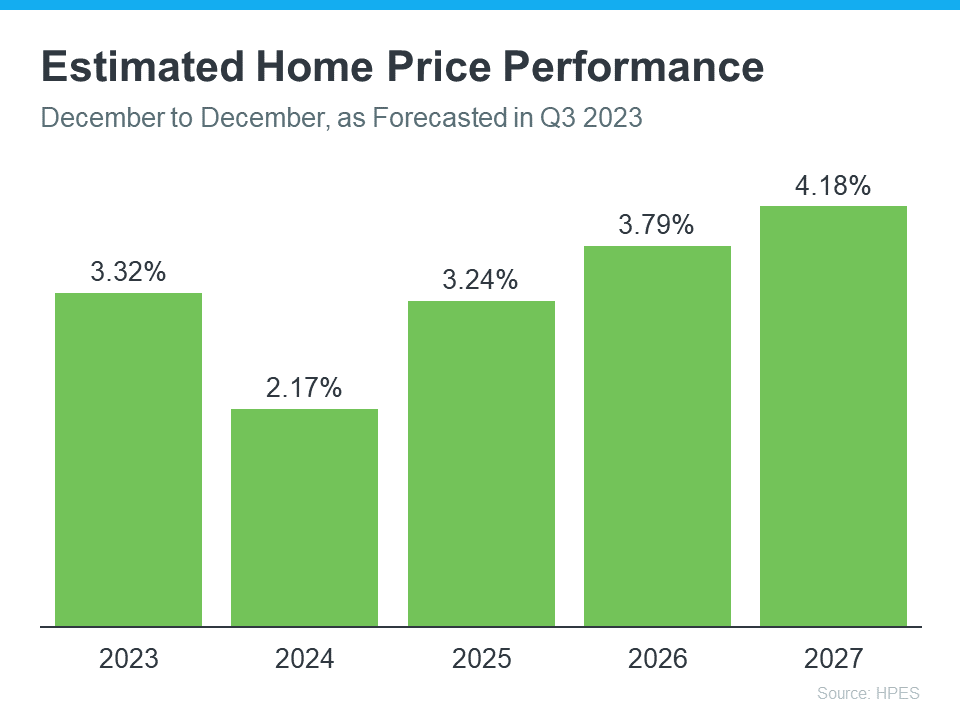
To help show just how confident experts are in this continued appreciation, take a look at the Home Price Expectation Survey from Pulsenomics. It’s a survey of a national panel of over 100 economists, real estate experts, and investment and market strategists. As the graph below shows, the consensus is, that prices will keep climbing next year, and in the years to come.


3. Is a Recession Around the Corner?

While recession talk has been a common thing over the past few years, there’s good news on that front.

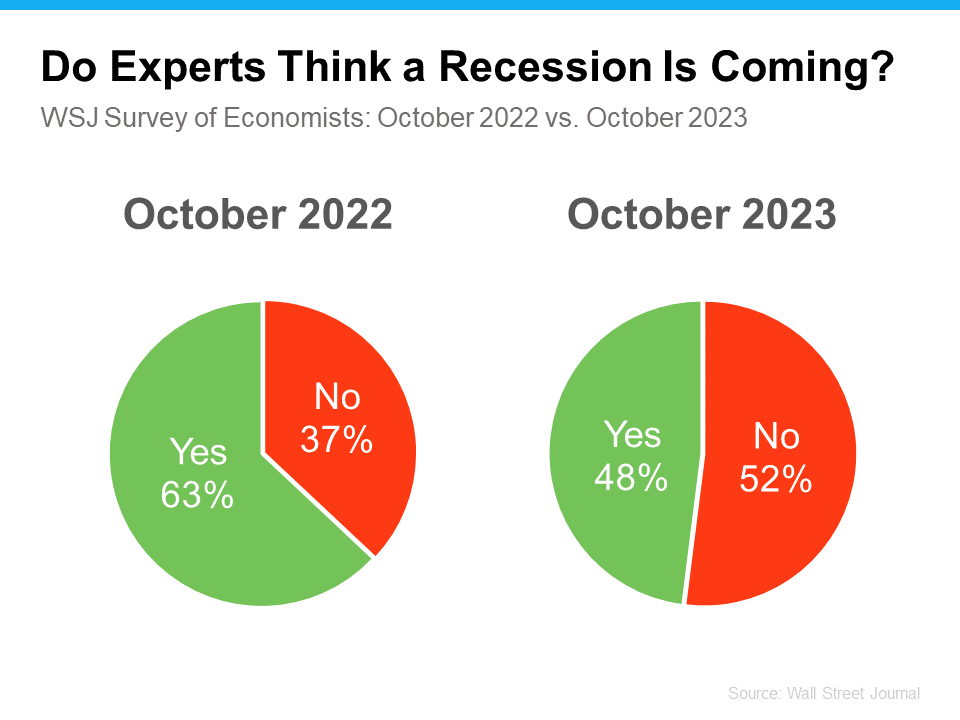
The Wall Street Journal (WSJ) polls experts on this topic regularly. And last year at this time, most of them thought a recession would have happened by now. But as experts look at all the leading indicators today, they’re changing their minds and saying a recession is getting less and less likely. The latest results show that more experts now think we’re not headed for another recession (see chart below):


This is big news for the housing market. And while the 48% to 52% split may seem close to half and half, the key thing to focus on is that the majority of these experts think we’ve avoided a recession already.

Bottom Line

The big takeaway? The data shows there isn’t cause for concern – there are actually more signs of hope. Let’s connect to talk more about the housing market questions on your mind as we head into the new year. 

Posted in Homeownership
Jan. 25, 2024

Experts Project Home Prices Will Rise over the Next 5 Years

Experts Project Home Prices Will Rise over the Next 5 Years

Even with so much data showing home prices are actually rising in most of the country, there are still a lot of people who worry there will be another price crash in the immediate future. In fact, a recent survey from Fannie Mae shows that 23% of consumers think prices will fall over the next 12 months. That’s nearly one in four people who are dealing with that fear – maybe you’re one of them.

To help ease that concern, here’s what the experts say will happen with home prices not just next year, but over the next five years.

Experts Project Ongoing Appreciation

While seeing a small handful of expert opinions may not be enough to change your mind, hopefully, a larger group of experts will reassure you. Here’s that larger group.

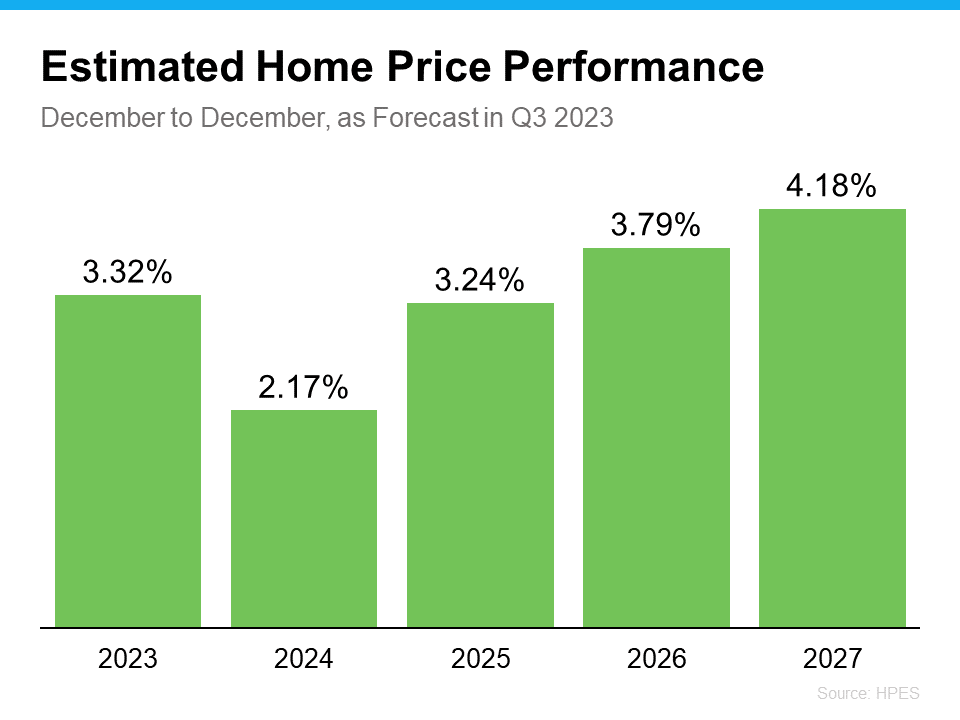
The Home Price Expectation Survey (HPES) from Pulsenomics is a great resource to show what experts forecast for home prices over a five-year period. It includes projections from over 100 economists, investment strategists, and housing market analysts. And the results from the latest quarterly release show home prices are expected to go up every year through 2027 (see graph below):


And while the projected increase in 2024 isn’t as large as 2023, remember home price appreciation is cumulative. In other words, if these experts are correct after your home’s value rises by 3.32% this year, it should go up by another 2.17% next year.

If you’re worried home prices are going to fall, here’s the big takeaway. Even though prices vary by local area, experts project they’ll continue to rise across the country for years to come at a pace that’s more normal for the market.

What Does This Mean for You?

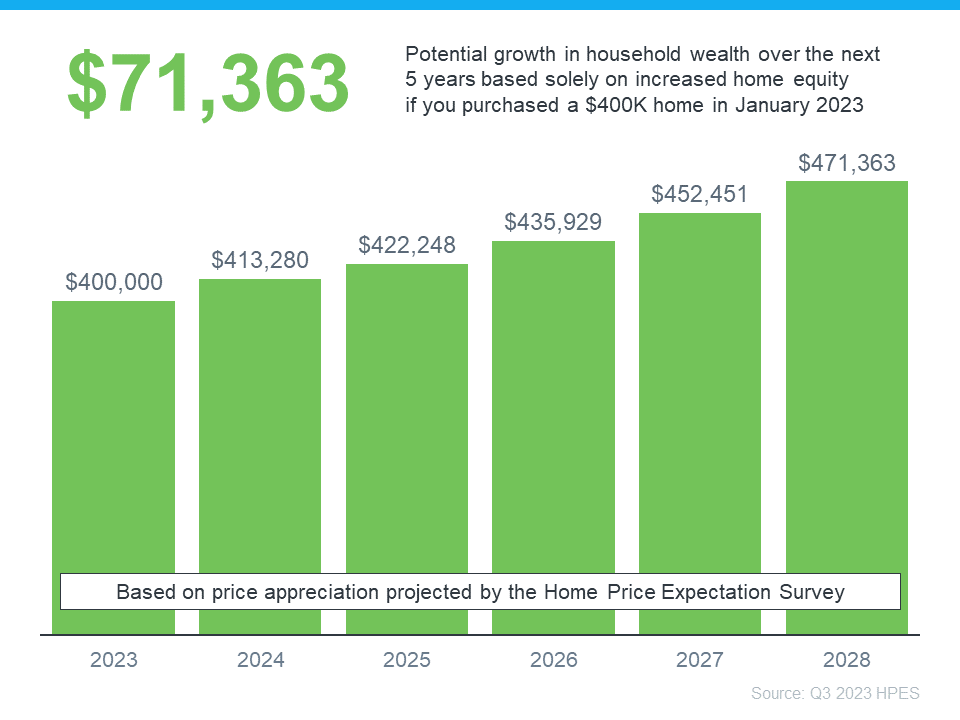
If you’re not convinced yet, maybe these numbers will get your attention. They show how a typical home’s value could change over the next few years using the expert projections from the HPES. Check out the graph below:


In this example, let’s say you bought a $400,000 home at the beginning of this year. If you factor in the forecast from the HPES, you could potentially accumulate more than $71,000 in household wealth over the next five years.

Bottom Line

If you’re someone who’s worried home prices are going to fall, rest assured a lot of experts say it’s just the opposite – nationally, home prices will continue to climb not just next year, but for years to come. If you have any questions or concerns about what’s next for home prices in our local area, let’s connect. 

Posted in Market Updates
Jan. 25, 2024

Home Prices Still Growing – Just at a More Normal Pace

Home Prices Still Growing – Just at a More Normal Pace


If you’re feeling a bit muddy on what’s happening with home prices, that’s no surprise. Some people are still saying prices are falling, even though data proves otherwise. Part of that misconception is because people are getting their information from unreliable sources. But it’s also coming from some media coverage misrepresenting what the data really shows.

So, to keep things simple, here’s what you really need to know using real data you can trust.

Normal Home Price Seasonality Explained

In the housing market, there are predictable ebbs and flows that happen each year. It’s called seasonality. Spring is the peak homebuying season when the market is most active. That activity is typically still strong in the summer but begins to wane as the cooler months approach.

Home prices follow along with seasonality because prices appreciate most when something is in high demand. That’s why there’s a reliable long-term home price trend. The graph below uses data from Case-Shiller to show the typical percent change for monthly home price movement from 1973 through 2022 (not adjusted, so you can see the seasonality):


As the data shows, at the beginning of the year, home prices grow, but not as much as they do when entering the spring and summer markets. That’s because the market is less active in January and February since fewer people move in the cooler months. As the market transitions into the peak homebuying season in the spring, activity ramps up, and home prices go up a lot more in response. Then, as fall and winter approach, prices still grow, just at a slower pace as activity eases again.

This Year, Seasonality Has Returned

Now, let’s look at how this year compares to that long-term trend (see graph below):


Here’s the latest data for this year from that same source. Just like before, the dark bars are the long-standing trend. The green bars represent what’s happened this year. As you can see, the green bars are beginning to fall in line with what’s normal for the market. That’s a good thing because it’s more sustainable price growth than we’ve seen in recent years.

In a nutshell, nationally prices aren’t falling, it’s just that price growth is beginning to normalize. Moving forward, there’s a chance the media will misrepresent this slowing of home price growth as prices falling. So don’t believe everything you see in the headlines. The data included here gives you the context you need to really understand what’s happening. So, if you see something in the headlines that’s confusing, don’t just take it at face value. Ask a trusted real estate professional for more information.

Remember, it’s normal to see home price growth slow down as the year goes on. And that definitely doesn’t mean home prices are falling. They’re just rising at a more moderate pace.

Bottom Line

Home price appreciation is returning to normal seasonality and that’s a good thing. If you have questions about what’s happening with prices in our local area, let’s connect.

Posted in Market Updates
Jan. 24, 2024

Why You Should Use a Real Estate Agent When You Buy a Home

Why You Should Use a Real Estate Agent When You Buy a Home


If you’ve recently decided you’re ready to become a homeowner, chances are you’re trying to figure out what to do first. It can feel a bit overwhelming to know where to start, but the good news is you don’t have to navigate all of that alone.

When it comes to buying a home, there are a lot of moving pieces. And that’s especially true in today’s housing market. The number of homes for sale is still low, and home prices and mortgage rates are still high. That combination can be tricky if you don’t have reliable expertise and a trusted advisor on your side. That’s why the best place to start is connecting with a local real estate agent.

Agents Are the #1 Most Useful Source in the Buying Process

The latest annual report from the National Association of Realtors (NAR) finds recent homebuyers agree the #1 most useful source of information they had in the home buying process was a real estate agent. Let’s break down why.

How an Agent Helps When You Buy a Home

When you think about a real estate agent, you may think of someone taking you on home showings and putting together the paperwork, but a great agent does so much more than that. It’s not just being the facilitator for your purchase, it’s being your guide through every step.

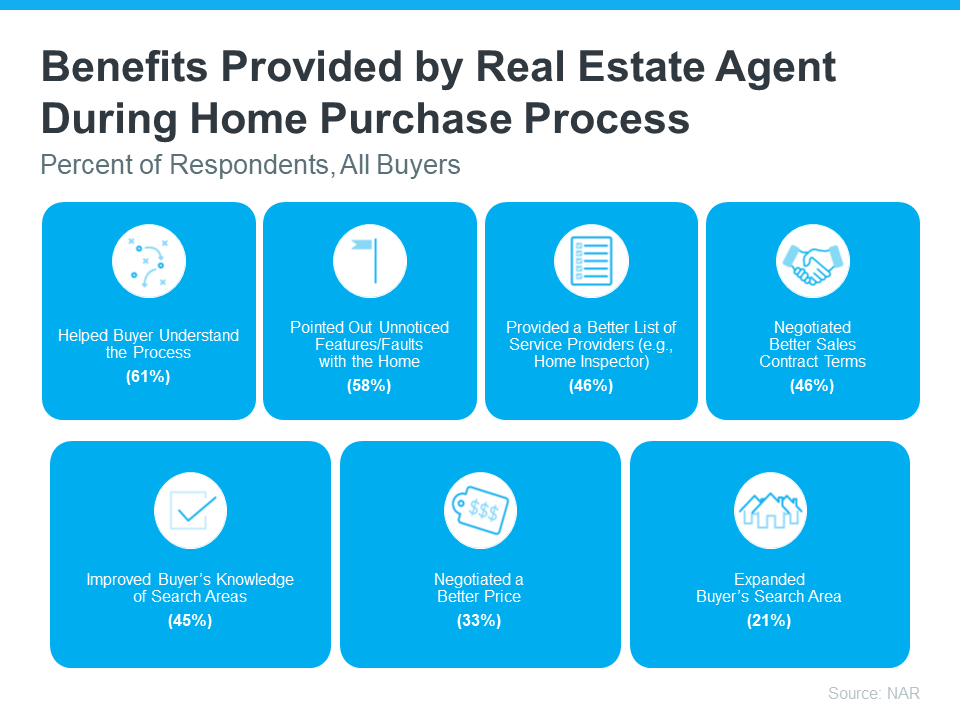
The visual below shows some examples from that same NAR release of the many ways an agent adds value. It includes the percentage of homebuyers in that report who highlighted each of these benefits:


Here’s a bit more context on how the survey results noted an agent continually helps buyers in these situations:

  • Helped Buyer’s Understand the Process: Do you know the difference between an inspection and an appraisal, what each report tells you, and why they’re both important? Or that there are things you shouldn’t do after applying for a mortgage, like buying appliances or furniture? An agent knows all of these best practices and will share them with you along the way, so you don’t miss any key steps by the time you get to the closing table.
  • Pointed Out Unnoticed Features or Faults with the Home: An agent also has a lot of experience evaluating homes. They’ve truly seen it all. They’ll be able to pinpoint some things you may not have noticed about the home that could help inform your decision or at least what repairs you ask for.
  • Provided a Better List of Service Providers: In a real estate transaction, there are a lot of people involved. An agent has experience working with various professionals in your area, like home inspectors, and can help connect you with the pros you need for a successful experience.
  • Negotiated Better Contract Terms and Price: Did something pop up in the home inspection or with the appraisal? An agent will help you re-negotiate as needed to get the best terms and price possible for you, so you feel confident with your big purchase.
  • Improved Buyer’s Knowledge of the Search Area: Moving to a new town and you’re not familiar with the area, or you’re staying nearby, but don’t know which neighborhoods are most affordable? Either way, an agent knows the local area like the back of their hand and can help you find the perfect location for your needs.
  • Expanded Buyer’s Search Area: And if you’re not finding anything you’re interested in within your initial search radius, an agent will know other neighborhoods nearby you should consider based on what you like, what amenities you want, and more.

Bottom Line

If you’re looking to buy a home, don’t forget about the many ways an agent is essential to that process. Any hurdle that pops up, a negotiation that needs to take place, and more, your agent will know how to handle it while they make sure to minimize your stress along the way. Let’s connect to tackle this together.

Posted in Homeownership
Jan. 24, 2024

Retiring Soon? Why Moving Might Be the Perfect Next Step

Retiring Soon? Why Moving Might Be the Perfect Next Step

If you’re thinking about retirement or have already retired this year, it’s a good time to consider if your current house is still a good fit for the next chapter in your life.

Fortunately, you may be in a better position to make a move than you realize. Here are a few things to think about as you decide whether or not to sell and make a move.

How Long You’ve Been in Your Home

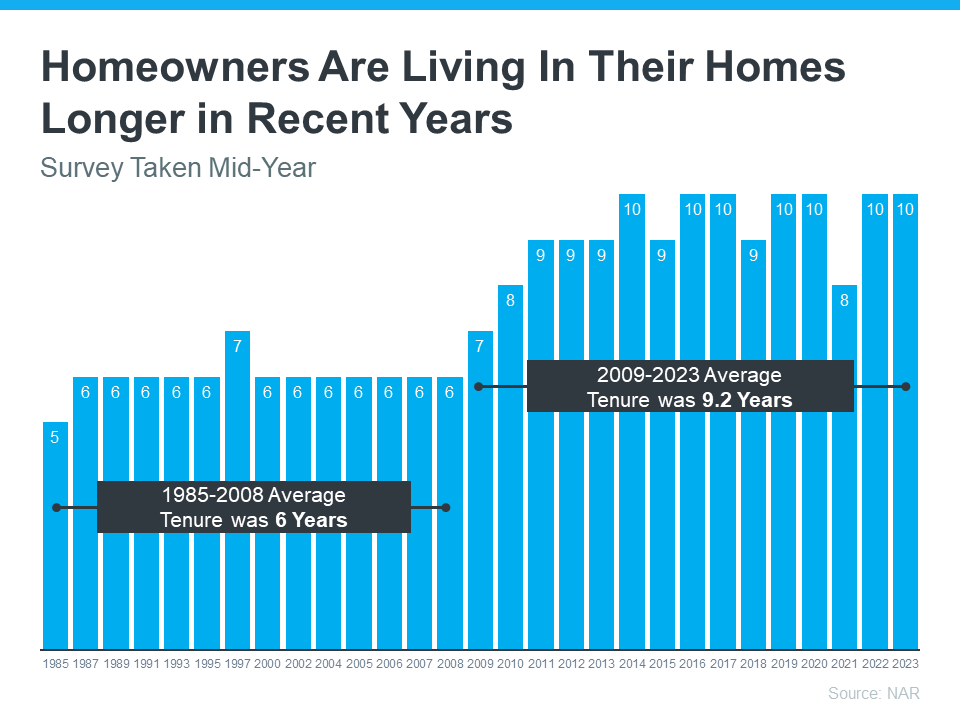
From 1985 to 2008, the average length of time homeowners typically stayed in their homes was only six years. But according to the National Association of Realtors (NAR), that number is rising today, meaning many homeowners are living in their houses even longer (see graph below):


When you live in a home for a significant period of time, it’s natural for you to experience a number of changes in your life while you’re in that house. As those life changes and milestones happen, your needs may change. And if your current home no longer meets them, you may have better options waiting for you.

How Much Equity You’ve Gained

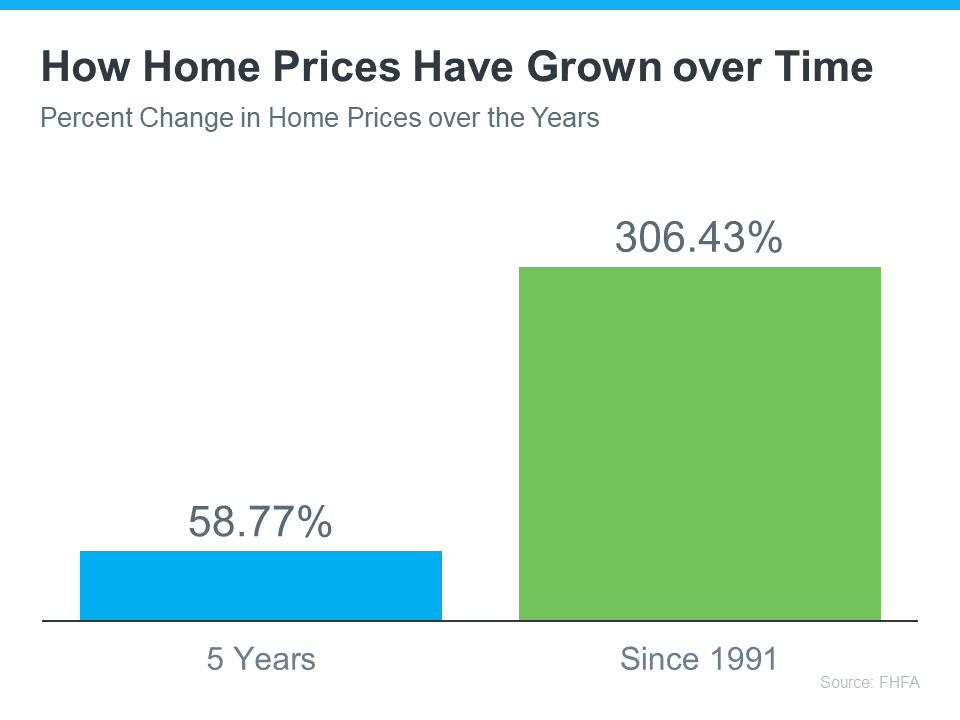
Additionally, if you’ve been in your house for more than a few years, you’ve likely built-up significant equity that can fuel your next move. That’s because the longer you’ve been in your house, the more likely it’s grown in value due to home price appreciation. Data from the Federal Housing Finance Agency (FHFA) illustrates that point (see graph below):


While home price growth varies by state and local area, the national average shows the typical homeowner who’s been in their house for five years saw it increase in value by nearly 60%. And the average homeowner who’s owned their home since 1991 saw it more than triple in value over that time.

Consider Your Retirement Goals

Whether you're looking to downsize, relocate to a dream destination, or simply be closer to loved ones, your home equity can be a key to realizing your homeownership goals. NAR shares that for recent home sellers, the primary reason to move was to be closer to loved ones.

Whatever your home goals are, a trusted real estate agent can work with you to find the best option. They’ll help you sell your current house and guide you through buying the home that’s right for your lifestyle today.

Posted in Homeownership
Jan. 23, 2024

What You Need To Know About Saving for a Home in 2024

What You Need To Know About Saving for a Home in 2024

If you’re planning to buy a home, knowing what to budget for and how to save may sound intimidating – but it doesn’t have to be. One way to ease those concerns is to make sure you understand some of the costs you may encounter up front. And to do that, always turn to trusted real estate professionals. They can help you set a plan and take a strategic look at your budget and your process before you even get started.

Here are just a few things experts say you should be thinking about.

1. Down Payment

Saving for your down payment is likely top of mind as you set out to buy a home. But do you know how much you’ll need? While every buyer’s situation is different, there’s a common misconception that putting 20% of the purchase price down is required. An article from the Mortgage Reports explains why that’s not always the case:

“The idea that you have to put 20% down on a house is a myth. . . . The right amount depends on your current savings and your home buying goals.”

To understand your options, partner with trusted real estate professionals to go over the various loan types, down payment assistance programs, and what each one requires. The more you know ahead of time, the easier the process will be.

2. Closing Costs

Make sure you also budget for closing costs, which are a collection of fees and payments made to the various parties involved in your transaction. Bankrate explains:

Closing costs are the fees you pay when finalizing a real estate transaction, whether you’re refinancing a mortgage or buying a new home. These costs can amount to 2 to 5 percent of the mortgage so it’s important to be financially prepared for this expense.”

The best way to understand what you’ll need at the closing table is to work with a trusted lender. They can provide you with answers to the questions you might have.

3. Earnest Money Deposit

If you want to cover all your bases, you can also consider saving for an earnest money deposit (EMD). An EMD is money you pay as a show of good faith when you make an offer on a house. According to Realtor.com, it’s usually between 1% and 2% of the total home price.

This deposit works like a credit. It’s not an added expense – it’s paying a portion of your costs upfront. You’re using some of the money you’ve already saved for your purchase to show the seller you’re committed and serious about buying their house. Realtor.com describes how it works as part of your sale:

It tells the real estate seller you’re in earnest as a buyer . . . Assuming that all goes well and the buyer’s good-faith offer is accepted by the seller, the earnest money funds go toward the down payment and closing costs. In effect, earnest money is just paying more of the down payment and closing costs upfront.”

Keep in mind, an EMD isn’t required, and it doesn’t guarantee your offer will be accepted. It’s important to work with a real estate advisor to understand what’s best for your situation and any specific requirements in your local area. They’ll advise you on what moves you should make so you can make the best possible decisions throughout the buying process.

Bottom Line

When buying a home, being informed about what to save for is key. Let’s connect so you’ll have an expert on your side to answer any questions you have along the way.

Posted in Homeownership
Jan. 23, 2024

Don't leave things to chance

Posted in Homeownership