Area Real Estate News & Market Trends

You’ll find our blog to be a wealth of information, covering everything from local market statistics and home values to community happenings. That’s because we care about the community and want to help you find your place in it. Please reach out if you have any questions at all. We’d love to talk with you!

Feb. 22, 2024

6 Paint Color Mistakes That Make Designers Cringe

Let's get something straight: There's nothing wrong with choosing a paint color you love, even if it doesn't top the paint color charts. In fact, choosing a color that doesn't speak to you might just be the most cringe-worthy of mistakes.

Instead, some of the most problematic paint color issues come about through the absence of professional expertise. Designers can help turn a ho-hum palette into a full-fledged work of art. To help steer you clear of any paint color problems (whether foreseen or unforeseen), designers share the top paint color pitfalls.

1. Don't Settle for Seconds

Especially when you have a post-move to-do list that seems to never end, it can be tempting to maintain passed-down color choices. Keeping the color scheme of the house you just moved into, especially when it's not totally off-putting but definitely not something you would have chosen yourself if given the option.

This can lead you to start making bigger purchases, like sofas and rugs, and end up with a mix of stagnant decor that you don't care about. "That's just a waste of money.  Hire a professional to help you decide on both the flooring and paint color options before you move in to help set the tone for your new-to-you space. 

2. Don't Be Afraid to Make an Emotional Choice

When it comes to certain spaces, such as a mudroom, hall bath, or even the upstairs den, you might be able to get away with a slightly trendier paint choice. But when it comes to the spaces where you spend the most time, to go with your gut. Determine the most lived-in spaces and start from there.

Avoid selecting a paint color simply because it's trendy—a surefire way to end up with a palette you hate that would likely have a negative impact on your mood. Work with a color consultant who can physically come to your space and help you figure that out.

3. Don't Only Think About Walls

Crown molding, baseboards, and door casings often get forgotten. Most often these they are painted white however they don't have to be.  Even if you're going for a bolder, non-neutral choice, bring that color all the way to the ceiling. It's like wearing an all-black dress, then giving yourself the luxury of adding accessories in just the right areas.

4. Don't DIY a Project Beyond Your Skill Level

This is a good time to circle back on the idea of being honest with yourself. Your time and talent for this particular job should be at the top of the list of deciding factors. Without those two things, job is rushed, things get missed, colors go wrong, and you end up with an amazing home with a bad paint job. Nobody wants that. Know when to call in the pros and you can save yourself (and those who dwell with you) from this fate.

5. Don't Use Tricky Colors Without Testing

Any color has the potential to go wrong thanks to factors like whether you're working with artificial or natural light, the height of your ceiling, your flooring type, and more. But there are two paint colors that are notorious troublemakers for the DIYer: yellow and red.

Both can go wrong, ending up looking like totally different colors on different walls in the same space or different rooms in the same home. Red is great outside like on the front door. As for yellow, you'll want to observe the color in your home throughout the day. Get a sample of the color, paint several white poster boards, and move them throughout the space at different times of the day. That way you can be sure you're making the right decision.

6. Don't Overlook the Finish

For a novice home painter, going with a flat finish will afford the most forgiveness, camouflaging imperfections rather than drawing the eye to them. If you have small children this isn't the best route because little fingerprints and sticky smudges will show on the walls. Eggshell or satin finish is your best option as both hide some drywall imperfections (unlike a gloss finish) and can also be wiped down easily when needed.

Posted in Household tips
Feb. 22, 2024

The Viral 'Unexpected Red Theory' Works In Any Space, According to TikTok

Red is officially the "it" color of the season—and according to a new trend, you can't go wrong when adding it to your home. It's unclear who originally came up with this idea, deemed the “unexpected red theory," but a video by TikTok creator @intayriors has gone particularly viral with more than 96,500 likes and 822,500 views. 

Red Accents In Kitchen Design Ideas, Pictures, Remodel and ...

In her video, she explains that “the unexpected red theory is basically adding anything red, big or small, to a room where it doesn’t match at all, and it automatically looks better.”

She shows a couple of examples of interiors, including hallways painted entirely purple with a massive red print. “Normally, you wouldn't think to pair red and purple together, but I’m petitioning for red to be a neutral color because it just looks good with everything,” she said. 

A designer from @bluecopperdesign on TikTok agrees, saying she learned about this theory, which her teacher called the lipstick theory, in design school.

“A room is not complete without a pop of red,” she said in the video. “But that kind of related to other colors that would be used as lipstick. So it doesn’t necessarily have to be fire engine red, but it could be pinks or mauves or burgundy, things like that. As a designer, I actually don’t use red that much at all, but I’m kind of liking the little pops and the trends of where red is going.”

She noted that you could add this pop of red to anything from a set of curtains in the living room to a bouquet of fresh flowers.

Nearly every one of the duets of @intayriors’s video feature others praising the idea and showing off the pops of red in their homes. User @luluannprice, for instance, said she adds a pop of red to take away from other unsightly elements when she decorates for home staging.

The unexpected red theory works for distractions, sure, but it’s primarily used to make a room look more cohesive, put together, and finished. This works with primary colors in general, as one commenter pointed out.

If you’re looking to put this color theory to the test, try incorporating a red light fixture, rug, checkered blanket, frames, or a couple small red knickknacks to your space. You may have to play around a bit because the shade of red definitely matters—bright, primary red works best with green, blue, and black, while orangey-red works better with off-whites, grays, and light blue-greens.

Posted in Household tips
Feb. 21, 2024

Fannie Works for You

Posted in Homeownership
Feb. 21, 2024

Fannie As Your Listing Agent

Posted in Homeownership
Feb. 20, 2024

Projects You’ll Love but Might Not Increase Sellability

Plenty of projects are fun to do, but they might not increase your home’s sellability. Still, they’re great features to have while living in a home, even if they won’t make you money on resale. Here are a few ideas from experts on how to improve your space if you aren't concerned with ROI.

Water Features

Outdoor water features, such as ponds and fountains, are sometimes a deal breaker for new owners who don’t want the expense or upkeep. 

However, if you’re looking for a relaxing feature for your patio and the sound of a babbling brook is on your wish list, go for it.

For some owners, these amenities can bring joy, tranquility, encourage a hobby, provide entertainment, or simply be pleasing to the eye.

Outdoor Kitchens

Indoor kitchens are some of the best projects to invest in if you’re looking for a good ROI. Outdoor kitchens are less a financial investment than a lifestyle investment. 

For those in the right climate, indoor-outdoor living is an ideal way to make the most of one’s home. Outdoor kitchens with grills, fridges and other appliances meant for hosting and entertaining can epitomize luxury for some, while others might find that use of space or choice in investment less than ideal.

Gazebos, Patios, and Decks

We all have different ideas of how to enjoy our backyards. For some, adding features such as gazebos or decks allows homeowners to sit and enjoy nature. 

Given the maintenance and weather considerations, some potential buyers might not be interested in inheriting these structures.

Decks, patios, and fire pits won’t appeal to every buyer. The same for a large children’s playground or treehouse, not every buyer will have young children.

Hot Tubs

Soaking under the stars is a great way to relax and unwind in your backyard, but buying and maintaining a hot tub isn’t going to bring you much money when you go to sell. 

Hot tubs are not known for bringing value to a property. In fact, if they are not operable, they can actually detract from home value.

Specialty Wall Coverings

Your space will feel the most like home when you make it yours. That might mean super personalized projects or a choice of tile or paint you love. 

You should limit where you personalize your space instead maintain a neutral aesthetic in the primary living areas and prioritize customization for specific requirements in secondary spaces or a guest area.

Wallpaper can be hard to remove but a beautiful accent wall with a bold pattern can bring you joy each time you see it. The key is not to go overboard. 

The same goes for Venetian plaster walls, high-gloss walls, and even custom window treatments. These features pack a punch and can elevate any room, but  they aren’t great for ROI or resale.

Personalized Projects

Say you have a unique hobby or personal aesthetic you know doesn’t appeal to the masses. While dedicating an entire room to a figurine collection or video game addiction might seem like a bad idea for resale. 

A good compromise might be to design the space so that it can easily be used in a different way down the line. The next owner can dedicate the space for a yoga or art studio if it’s easily converted. 

If something is your passion and it helps you relax, then having your own place to pursue it will ultimately contribute to your enjoyment of your home. 

Smart Home Features

Smart home features range from expensive, whole-home upgrades to inexpensive light bulbs or outlets. 

Smart door locks make it easy to lock and unlock your home in person or remotely. Plus, features such as doorbells, motion sensors, and security systems can keep you safe. 

Some homeowners haven’t yet adopted smart technology and might see it as a burden. A lot of these devices must be connected to the internet, and if your internet goes out, it can cause headaches for the homeowner. What if the home buyer isn't tech savvy?

Posted in Homeownership
Feb. 20, 2024

9 Things You Must Fix Before Listing

Getting your money’s worth on a home sale is best achieved by proactively addressing the major issues. Here are some problems that real estate experts agree you absolutely have to repair before listing your home. 

1. Water Damage and Mold

Water damage and any resulting signs of water damage, including mold, are a must-fix when listing a home. 

Homeowners should absolutely fix any remnants of water damage in their home—even if it is just a cosmetic stain on the paint from a previous leak that has been repaired.

Not only is water damage a significant problem for a home, but it can also trigger a series of doubts for potential buyers about the property's overall condition.

Signs of water damage open up a can of worms for a buyer. As soon as buyers see evidence of water damage, they start to worry about what else is not working, whether it was ever properly repaired, whether there is mold and mildew inside the walls, and why the homeowner couldn’t be bothered to fix something so important.

2. Faulty Smoke Detectors

The health and safety of all occupants is paramount whether you’re selling or buying, and making sure smoke detectors, carbon monoxide detectors, and radon systems are working is crucial. 

Safety is critical, and we encourage all sellers to check local requirements for guidelines to eliminate some of the guesswork. Always test smoke detectors and install them according to local code. Carbon monoxide detectors are encouraged but may not be required.

3. Busted Plumbing

Plumbing is an essential component of a safe home, and ensuring that everything from your toilet to your sink and septic tank works is essential for potential buyers. 

A licensed plumber should make any plumbing repairs.

4. Malfunctioning HVAC Systems

You can’t live safely in a home without heat or cool air. Having an HVAC system that’s in working order is a must when you sell. 

When your HVAC works efficiently, heat and cool air are distributed throughout the home with good circulation. Common system breakdowns are a result of dirty HVAC filters, thermostat settings, a pilot light being out, or a faulty thermocouple.

Changing your HVAC filter once every 30 to 90 days is ideal. You can also schedule a biannual tune-up to ensure you’re never without heat. 

5. Structural Issues

Any essential repair that implies a structural issue and compromises the integrity of the structure could deter potential buyers.

Structural issues include leaning walls, sagging roofs, and cracks in the walls, ceilings, and fireplaces. 

“Structural and foundational issues are a tough sell because they imply other issues could be behind the walls.

6. Foundation Problems

The seriousness of a foundation problem is self-evident in the word itself: A solid foundation is vital for a good home. 

The ground around your home may shift, causing changes to how the home rests on the foundation.

Before listing, check for cracks that are larger than 1/8-inch in width—the thickness of two pennies—or are actively getting bigger. 

To help identify movement, you can monitor a crack over time by placing a piece of masking tape over it and seeing if it shifts.

Foundation problems spell danger on an inspection report, so addressing them before you sell will ensure a clean bill of health from your buyer’s inspector. 

7. Roof Damage

A bad roof can lead to major problems for your entire home. If you can spot these problems before selling, it’s wise to address them. 

A poorly maintained roof can lead to deterioration, damaged shingles, and other issues, such as moss buildup, making it easier for water to seep into ceilings. A slow roof leak can turn into a huge backlog of moisture in your ceiling or attic. This can eventually proliferate into mold that grows on walls and framing, leading to poor air quality in the home and damage to your home’s structural framing.

To spot a damaged roof, look for missing, worn, or damaged shingles while inspecting the roof from the ground. Trimming trees that are hanging over gutters or rooflines to prevent further damage.

8. Broken Light Fixtures

Light fixtures are easy fixes that go a long way when it comes to staging your home and selling it.

Make sure that all your lightbulbs are working; this not only helps from a staging perspective by keeping rooms as bright as possible, but it also allays any fears buyers have of anything possibly wrong with the electrics.

You should also address other, more serious lighting issues that have major implications on safety and meeting code.

9. Broken Appliances

Like signs of water damage, nonworking appliances could make a buyer wonder whether other systems in the home have been neglected.

If a home’s fridge, range, or other kitchen appliance is on the fritz, replacement may not be necessary.  Much of the decision on whether to replace is contingent on the pricing of the home and its closest comparables. In some cases, a buyer may prefer to pick out a replacement. An allowance or price reduction could be an attractive approach to broken appliances.

Posted in Homeownership
Feb. 19, 2024

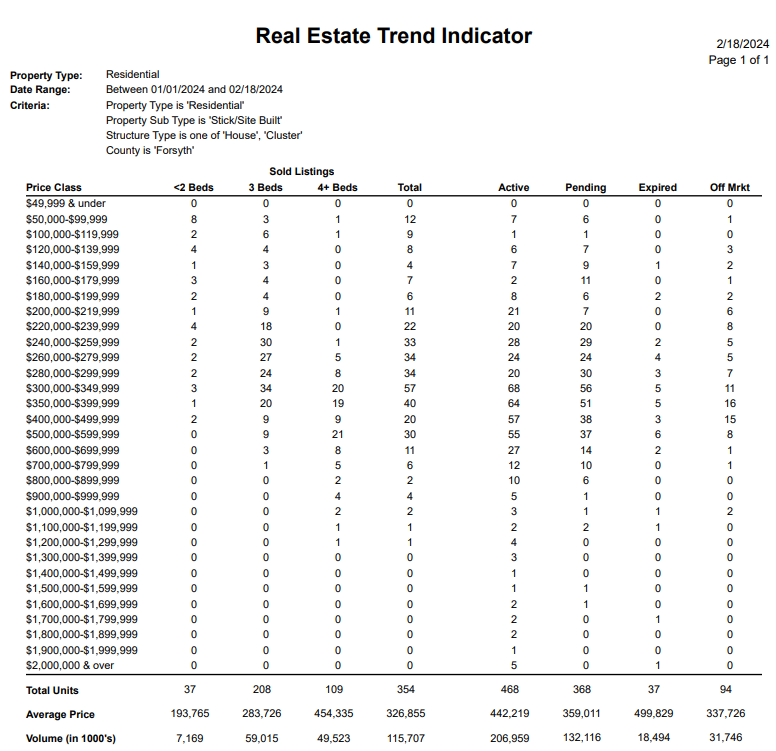
Triad Real Estate Market Update

The Triad NC real estate market

continues to move forward at a good pace.

For more details, reach out to me.


Posted in Market Updates
Feb. 19, 2024

Home Equity Can Be a Game Changer When You Sell

Are you on the fence about selling your house? While affordability is improving this year, it’s still tight. And that may be on your mind. But understanding your home equity could be the key to making your decision easier. An article from Bankrate explains:

Home equity is the difference between your home's value and the amount you still owe on your mortgage. It represents the paid-off portion of your home.
You'll start off with a certain level of equity when you make your down payment to buy the home, then continue to build equity as you pay down your mortgage. You'll also build equity over time as your home's value increases.”

Think of equity as a simple math equation. It's the value of your home now minus what you owe on your mortgage. And guess what? Recently, your equity has probably grown more than you think.

In the past few years, home prices skyrocketed, which means your home's value – and your equity – likely shot up, too. So, you may have more equity than you realize.

How To Make the Most of Your Home Equity Right Now

If you're thinking about moving, the equity you have in your home could be a big help. According to CoreLogic:

“. . . the average U.S. homeowner with a mortgage still has more than $300,000 in equity . . .”

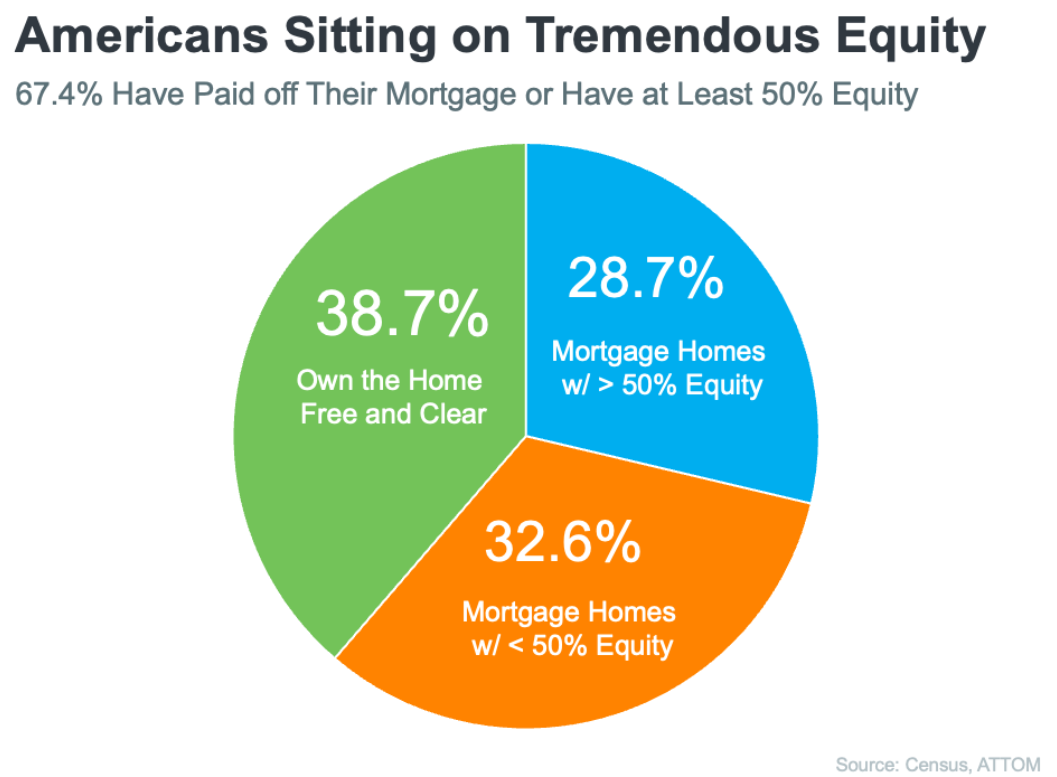
Clearly, homeowners have a lot of equity right now. And the latest data from the Census and ATTOM shows over two-thirds of homeowners have either completely paid off their mortgages (shown in green in the chart below) or have at least 50% equity (shown in blue in the chart below):


 That means roughly 70% have a tremendous amount of equity right now.

After you sell your house, you can use your equity to help you buy your next home. Here’s how:

  • Be an all-cash buyer: If you’ve been living in your current home for a long time, you might have enough equity to buy your next home without having to take out a loan. If that’s the case, you won’t need to borrow any money or worry about mortgage ratesInvestopedia states:
“You may want to pay cash for your home if you're shopping in a competitive housing market, or if you'd like to save money on mortgage interest. It could help you close a deal and beat out other buyers.
  • Make a larger down payment: Your equity could also be used toward your next down payment. It might even be enough to let you put a larger amount down, so you won’t have to borrow as much money. The Mortgage Reports explains:
Borrowers who put down more money typically receive better interest rates from lenders. This is due to the fact that a larger down payment lowers the lender’s risk because the borrower has more equity in the home from the beginning.”

The Easy Way To Find Out How Much Equity You Have

To find out how much equity you have in your home, ask a real estate agent you trust for a Professional Equity Assessment Report (PEAR). 

Bottom Line

Planning a move? Your home equity can really help you out. Let’s connect to see how much equity you have and how it can help with your next home.

Posted in Homeownership
Feb. 16, 2024

Bridging the Gaps on the Road to Homeownership

Homeownership is a major part of the American Dream. But, the path to achieving this dream can be quite difficult. While progress has been made to improve fair housing access, households of color still face unique challenges on the road to owning a home. Working with the right real estate experts can make all the difference for diverse buyers.

It's clear that achieving homeownership is more challenging for certain groups because there’s still a measurable gap between the overall average U.S. homeownership rate and that of non-white groups. Today, Black households continue to have the lowest homeownership rate nationally (see graph below):

Homeownership is an important part of building household wealth that can be passed down to future generations. According to a report by the National Association of Realtors (NAR), almost half of Black homebuyers in 2023 were first-time buyers. That means many didn’t have home equity they could use toward their home purchase.

That financial hurdle alone makes buying a home more challenging, especially at a time when affordability is a major concern for first-time buyers. Jessica Lautz, Deputy Chief Economist at NAR says:

“It’s an incredibly difficult market for all home buyers right now, especially first-time home buyers and especially first-time home buyers of color.”

Because of these challenges, there are several down payment assistance programs specifically aimed at helping minority buyers fulfill their homeownership dreams:

  • The 3By30 program offers valuable resources for Black buyers, making it easier for them to secure a down payment and buy a home.
  • For Native Americans, Down Payment Resource highlights 42 U.S. homebuyer assistance programs across 14 states that make homeownership more attainable by providing support with down payments and other costs.
  • Fannie Mae provides down payment assistance to eligible first-time homebuyers living in Latino communities.

Even if you don’t qualify for these programs, there are many other federal, state, and local options available to look into. And a real estate professional can help you find the ones that best meet your needs.

For minority homebuyers, the challenges that remain can be a point of pain and frustration. That’s why it’s so important for members of diverse groups to have the right team of experts on their sides throughout the homebuying process. These professionals aren’t only experienced advisors who understand the market and give the best advice, they’re also compassionate educators who will advocate for your best interests every step of the way.

Bottom Line

Let’s connect to make sure you have the information and support you need as you walk the path to homeownership

Posted in Homeownership
Feb. 16, 2024

Why So Many People Fall in Love with Homeownership

Chances are at some point in your life you’ve heard the phrase, home is where the heart is. There’s a reason that’s said so often. Becoming a homeowner is emotional.

So, if you’re trying to decide if you want to keep on renting or if you’re ready to buy a home this year, here’s why it’s so easy to fall in love with homeownership.

Customizing to Your Heart’s Desire

Your house should be a space that’s uniquely you. And, if you’re a renter, that can be hard to achieve. When you rent, the paint colors are usually the standard shade of white, you don’t have much control over the upgrades, and you’ve got to be careful how many holes you put in the walls. But when you’re a homeowner, you have a lot more freedom. As the National Association of Realtors (NAR) says:

“The home is yours. You can decorate any way you want and choose the types of upgrades and new amenities that appeal to your lifestyle.”

Whether you want to paint the walls a cheery bright color or go for a dark moody tone, you can match your interior to your vibe. Imagine how it would feel to come home at the end of the day and walk into a space that feels like you.

Greater Stability for the Ones You Love Most

One of the hardest things about renting is the uncertainty of what happens at the end of your lease. Does your payment go up so much that you have to move? What if your landlord decides to sell the property? It’s like you’re always waiting for the other shoe to drop. Jeff Ostrowski, a business journalist covering real estate and the economy, explains how homeownership can give you more peace of mind in a Money Geek article:

“Homeownership means you are the boss and have the biggest say in your lifestyle and family decisions. Suppose your kids are in public school and you don't want to risk having them change schools because your landlord doesn't renew your lease. Owning a home would remove much of the risk of having to move.”

A Feeling of Belonging

You may also find you feel much more at home in the community once you own a house. That’s because, when you buy a home, you’re staking a claim and saying, I’m a part of this community. You’ll have neighbors, block parties, and more. And that’ll give you the feeling of being a part of something bigger. As the International Housing Association explains:

“. . . homeowning households are more socially involved in community affairs than their renting counterparts. This is due to both the fact that homeowners expect to remain in the community for a longer period of time and that homeowners have an ownership stake in the neighborhood.”

The Emotional High of Achieving Your Dream

Becoming a homeowner is a journey – and it may have been a long road to get to the point where you’re ready to take the plunge. If you’re seriously considering leaving behind your rental and making this commitment, you should know the emotions that come with this owning a home are powerful. You’ll be able to walk up to your front door every day and have that sense of accomplishment welcome you home. 

Bottom Line

A home is a place that reflects who you are, a safe space for the ones you love the most, and a reflection of all you’ve accomplished. Let’s connect if you’re ready to break up with your rental and buy a home.

Posted in Homeownership