Area Real Estate News & Market Trends

You’ll find our blog to be a wealth of information, covering everything from local market statistics and home values to community happenings. That’s because we care about the community and want to help you find your place in it. Please reach out if you have any questions at all. We’d love to talk with you!

May 8, 2024

Choosing Between Chlorine and Saltwater Pools

What is the Best Type of Swimming Pool for My Home ...

Crystal clear water, refreshing dips – the perfect backyard oasis awaits! But when it comes to pool sanitation, two main choices emerge: chlorine or saltwater systems. Each has its own set of pros and cons. Let's explore some best practices for each:

Chlorine Power: Chlorine offers a simpler system at a lower upfront cost. Testing and maintaining chlorine levels is crucial, but it's a manageable routine. Chlorine tablets or liquid chlorine can be used, and shock treatments keep algae at bay. However, chlorine can irritate skin and eyes, and proper storage is necessary.

Saltwater Serenity: Saltwater pools boast a softer feel on skin and eyes. A salt chlorine generator converts salt into chlorine, creating a low-maintenance system. However, saltwater systems have a higher initial cost and require a salt cell replacement every few years. They're also more susceptible to corrosion on metal pool components.

Posted in General tips
May 8, 2024

volume_up Shield Your Skin: Why SPF is Your Sun Safety BFF

Summer sun feels great however please take the steps to protect your skin

Sunshine on your face might feel good, but those UV rays wreak havoc on your skin. Wearing SPF daily is the single most effective way to combat sun damage and safeguard your health. Here's why this little bottle is your best friend:

SPF stands for Sun Protection Factor, a measure of protection against UVB rays, the culprit behind sunburns. Broad-spectrum SPF 30 or higher also shields against UVA rays, which penetrate deeper and contribute to premature aging and skin cancer. Daily SPF use, even on cloudy days, significantly reduces your risk of these conditions. So, ditch the tanning bed and embrace a healthy glow – make SPF your daily ritual for beautiful, protected skin.


Posted in General tips
May 6, 2024

7 Lighting Mistakes to Fix ASAP


Discover the mistakes you never want to make when it comes to lighting, plus how to fix them.

Lighting can play a big part in your room’s overall design. Whether in the kitchen, living room, bedroom, or even the mudroom--lighting matters.  Factors such as what the room is used for, how much natural light it receives, and what kind of lighting types you're working with can all play a role in setting the scene. While there are plenty of ways to strike the right balance, there are also a handful of ways lighting can go wrong. Here are the mistakes to avoid where it comes to lighting, plus how to fix them.

1. You Aren't Paying Attention to Wattage

Each light fixture in your home has a recommended wattage that you should not exceed. Wattage measures the amount of energy the bulb emits—it doesn’t affect how bright or dim your light is. Selecting the right wattage for your fixture not only ensures you’re making an energy-efficient choice, but a safe one, too. If you select a bulb that is too high in wattage, it can cause damage to the fixture and lead to overheating with an increased potential for an electrical fire. Play it safe and always pay attention to wattage when outfitting your fixtures.

2. You Chose the Wrong Color Temperature

There are a variety of factors to look for when selecting the right lightbulbs for your fixtures. One of these is color temperature. It’s best to think about the function of the space when determining the right bulb temperature. For bedrooms, living rooms, and dining rooms (places where you want more ambience), warmer light is best. For spaces like the kitchen, home office, bathroom, or laundry room, cooler light will help create a more energized feeling.

3. Your Task-Oriented Spaces Are Too Dark

The brightness of your bulbs isn’t measured by the color temperature or even wattage but, instead, by lumens—and it’s just one more thing to consider when you’re selecting the right bulb for your light source. Particularly in spaces that are task-oriented like kitchens, bathrooms, and offices, it’s important to make sure there’s plenty of bright light. Similarly, you’ll want to make sure you don’t go too bright in spaces like bedrooms, living rooms, and other leisure spaces. But what happens if you want a more custom feel? That’s where a dimmer comes in.

4. You Didn’t Install a Dimmer

You chose the right wattage, paid attention to the color temperature, and made sure to select the right amount of light for each space, but something is still missing. It might just be a dimmer. For rooms where you might want a range of light (a brighter, more energetic look during the day, and dimmer, more ambient light in the evening) a dimmer can be just the ticket. You’ll likely find you don’t need to install a dimmer in every room, but it can be helpful in spaces like dining rooms, living rooms, and bedrooms.

5. You Chose the Wrong Scale for Your Fixture

It might be tempting to commit to a too-small fixture when you've found the perfect style for your space. However, it's best to keep looking. A light fixture with the wrong scale can quickly become an unsightly focal point that makes the space feel off. Think about the height of your ceilings if you’re selecting an overhead fixture or the furnishing your fixture will sit upon if you’re selecting a lamp. Surrounding decor, the space’s design style, and more can all be factors that affect the desired scale for your light source.

While secondary light fixture scale should also be considered, it’s the overhead focal point fixtures that require the most attention when determining an ideal size for your space. A general rule, the length + width (in feet) of the room should equal the diameter of a chandelier in inches.

6. You Used Just One Type of Lighting

Lighting isn’t a one-and-done element. It’s important to use a mix of lamps, overhead lighting, floor lamps, and sconces. Having more than one kind of light source in a room adds character, dimension, and warmth while also allowing flexibility in how you light your space for various occasions. For example, if you’re playing a board game in the living room and want plenty of light, overhead lights can be ideal. But if you’re having a low-key movie night in the same space, a simple lamp or two, or perhaps even dimmed sconces, can create just the right amount of ambient light.

7. You Aren't Considering Natural Light

Finding the right balance of lighting isn’t all about artificial light. In fact, a lot of it can hinge on the amount of natural light in your space. Playing to natural light—and building your lighting around it—can create the ideal environment. Knowing the time of day when your space is the brightest, which windows are the most impactful for natural light, and determining the corners of your room that light doesn’t quite reach can help you map out your ideal lighting plan.

Posted in Household tips
May 3, 2024

New homes -- builders building smaller homes

May 3, 2024

Market update for zip 27104 in Winston Salem, NC

Want to know more about your home or area?  Let's chat.

Posted in Market Updates
May 1, 2024

Zip 27107 Market Update

Posted in Market Updates
April 24, 2024

4 Tips To Make Your Strongest Offer on a Home


Blog Image

Are you thinking about buying a home soon? If so, you should know today’s market is competitive in many areas because the number of homes for sale is still low – and that’s leading to multiple-offer scenarios. And moving into the peak homebuying season this spring, this is only expected to ramp up more.

Remember these four tips to make your best offer.

1. Partner with a Real Estate Agent

Rely on a real estate agent who can support your goals. As PODS notes:

“Making an offer on a home without an agent is certainly possible, but having a pro by your side gives you a massive advantage in figuring out what to offer on a house.”

Agents are local market experts. They know what’s worked for other buyers in your area and what sellers may be looking for. That advice can be game changing when you’re deciding what offer to bring to the table.

2. Understand Your Budget

Knowing your numbers is even more important right now. The best way to understand your budget is to work with a lender so you can get pre-approved for a home loan. Doing so helps you be more financially confident and shows sellers you’re serious. That gives you a competitive edge. As Investopedia says:

“. . . sellers have an advantage because of intense buyer demand and a limited number of homes for sale; they may be less likely to consider offers without pre-approval letters.”

3. Make a Strong, but Fair Offer

It’s only natural to want the best deal you can get on a home, especially when affordability is tight. However, submitting an offer that’s too low does have some risks. You don’t want to make an offer that’ll be tossed out as soon as it’s received just to see if it sticks. As Realtor.com explains:

“. . . an offer price that’s significantly lower than the listing price, is often rejected by sellers who feel insulted . . . Most listing agents try to get their sellers to at least enter negotiations with buyers, to counteroffer with a number a little closer to the list price. However, if a seller is offended by a buyer or isn’t taking the buyer seriously, there’s not much you, or the real estate agent, can do.”

The expertise your agent brings to this part of the process will help you stay competitive and find a price that’s fair to you and the seller.

4. Trust Your Agent During Negotiations

After you submit your offer, the seller may decide to counter it. When negotiating, it's smart to understand what matters to the seller. Once you do, being as flexible as you can on things like moving dates or the condition of the house can make your offer more attractive.

Your real estate agent is your partner in navigating these details. Trust them to lead you through negotiations and help you figure out the best plan. As an article from the National Association of Realtors (NAR) explains:

“There are many factors up for discussion in any real estate transaction—from price to repairs to possession date. A real estate professional who’s representing you will look at the transaction from your perspective, helping you negotiate a purchase agreement that meets your needs . . .” 


Bottom Line


In today's competitive market, let’s work together to find you a home you love and craft a strong offer that stands out. 


Posted in Homeownership
April 2, 2024

Add high value updates at a low cost


Posted in Household tips
April 2, 2024

Plants you should never prune in spring before they bloom

Spring often brings a long list of gardening chores such as cutting back dead growth after a long winter. Spring pruning can rejuvenate many types of plants and make way for fresh leafy growth. However, there are some spring-blooming plants that you should never prune until after their flowers have faded. Pruning before they bloom removes flower buds, reduces blooming, and impairs plant health. To enjoy your spring garden in all its flowering fullness, never prune the following plants in early spring. 


1. Azaleas and Rhododendrons – Azaleas and rhododendrons are closely related plants that are much loved for their showy springtime flowers. Like many other spring-blooming ornamentals, these plants only flower on old wood and will not bloom if you clip them back too early. Only prune azaleas and rhododendrons within three weeks after they bloom and apply fertilizer intended for acid-loving plants to maximize flowering. 


2.  Camelias- Camelias are staples in southern gardens, where they are well-known for their brightly colored flowers and luscious fragrance. However, camellias are another plant that only blooms on old wood, and early spring pruning can remove the flower buds before they open. Instead of pruning, give your camelias a little fertilizer in early spring and only pick up your pruning shears when the camelia plants are done flowering.


3. Forsythia - Forsythia are some of the first ornamentals to bloom after winter. Their sunny yellow flowers provide much-needed support for pollinators when other nectar sources are scarce. However, if you prune back forsythia before it flowers, you’ll likely clip away flower buds and reduce blooming. To avoid this, only remove branches with winter damage in early spring and wait until the forsythia stops flowering to do a more significant pruning.


4. Lilacs - Like forsythia, lilacs only bloom on old wood, and they form their flower buds in the summer or fall of the previous year. As a result, these plants should not be pruned in autumn or early spring before they flower. If you want to rejuvenate lilac shrubs, remove old canes and clip away up to a third of the plant's branches in late spring after lilac flowers have faded. 


5.  Some Hydrangeas - The pruning requirements of hydrangeas can be a bit confusing, as different hydrangea varieties have different needs.  Some hydrangeas, like panicle and smooth hydrangeas, flower on new wood which means they can be pruned in spring. However, other hydrangeas (including oakleaf, bigleaf, mountain, and climbing hydrangeas) produce flowers on old wood, and they should only be cut back after spring flowering and before August arrives.

Posted in Household tips
April 1, 2024

Single Women Are Embracing Homeownership

In today's housing market, more and more single women are becoming homeowners. According to data from the National Association of Realtors (NAR), 19% of all homebuyers are single women, while only 10% are single men.

If you're a single woman trying to buy your first home, this should be encouraging. It means other people are making their dreams a reality – so you can too.

Why Homeownership Matters to So Many Women

For many single women, buying a home isn't just about having a place to live—it's also a smart way to invest for the future. Homes usually increase in value over time, so they’re a great way to build equity and overall net worth. Ksenia Potapov, Economist at First Americansays:

“. . . single women are increasingly pursuing homeownership and reaping its wealth creation benefits.”

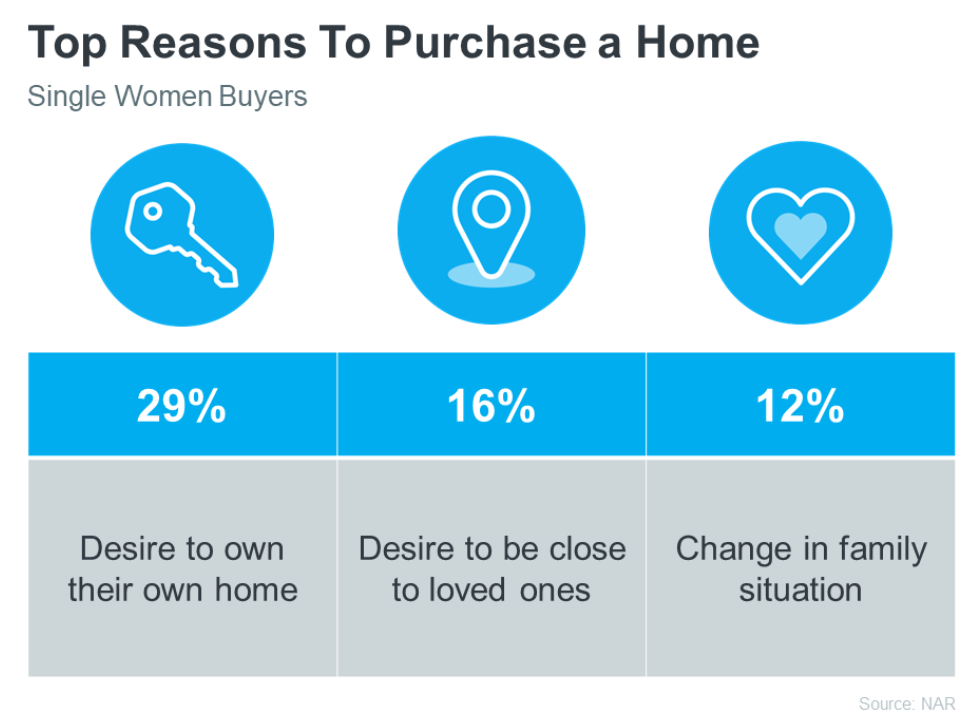
The financial security and independence homeownership provides can be life-changing. And when you factor in the personal motivations behind buying a home, that impact becomes even clearer.

The same report from NAR shares the top reasons single women are buying a home right now, and the reality is, they’re not all financial (see chart below):


If any of these reasons resonate with you, maybe it’s time for you to buy too.

Work with a Trusted Real Estate Agent

If you’re a single woman looking to buy a home, it is possible, even in today’s housing market. You’ll just want to be sure you have a great real estate agent by your side.

Talk about what your goals are and why homeownership is so important to you. That way your agent can keep what’s critical for you up front as they guide you through the buying process. They’ll help you find the right home for your needs and advocate for you during negotiations. Together, you can make your dream of homeownership a reality.

Bottom Line

Homeownership is life-changing no matter who you are. Let's connect today to talk about your goals in the housing market.

Posted in Homeownership