How's the real estate market for the last 7 days in Forsyth County NC?
Continuing to move forward. Biggest change was the average closed price increased. For more details reach out to me and let's chat.
.jpg)
You’ll find our blog to be a wealth of information, covering everything from local market statistics and home values to community happenings. That’s because we care about the community and want to help you find your place in it. Please reach out if you have any questions at all. We’d love to talk with you!
For many potential homebuyers, the path to owning a home often seems blocked by a significant financial hurdle: the 20% down payment. This longstanding belief holds that one must have 20% of a home's purchase price saved up to qualify for a mortgage. While having this amount can indeed reduce your monthly payments and exempt you from private mortgage insurance (PMI), it is far from the only route to homeownership. Let's debunk this myth and explore more accessible alternatives that might suit your financial situation better.
THE MYTH OF THE MANDATORY 20% DOWN PAYMENT
The notion that a 20% down payment is required to purchase a home is rooted in traditional lending practices but doesn't hold as much water today. In reality, many lenders offer loans that do not require such a substantial upfront sum. For instance, Federal Housing Administration (FHA) loans can be secured with as little as 3.5% down, while VA loans might not require any down payment at all for qualified veterans or active military personnel.
Moreover, some conventional loans are available with down payments as low as 3% through programs offered by Fannie Mae and Freddie Mac. These options present viable alternatives for individuals who may not have the means to save 20% of a home's purchase price.
EXPLORING DOWN PAYMENT ALTERNATIVES
Here are a few popular programs and options that offer lower down payment requirements:
THE IMPORTANCE OF CONSULTING WITH YOUR LOAN OFFICER
Understanding all available mortgage options can be daunting. That's why consulting with a loan officer is crucial. A knowledgeable loan officer can help you navigate the complexities of mortgage types, eligibility requirements, and financial preparations necessary to make the best decision for your circumstances.
WHY MAKING A PLAN IS ESSENTIAL
Planning your route to homeownership is about more than just finding a loan with a manageable down payment. It involves evaluating your financial health, understanding your budget constraints, and planning for future expenses beyond the purchase price, such as property taxes, home maintenance, and insurance.
Your loan officer can assist in crafting a personalized plan that considers your financial goals and timelines. They can also advise on strategies to improve your credit score, optimize your debt-to-income ratio, and explore additional resources like first-time homebuyer education courses or credit counseling services.
KNOW YOUR OPTIONS
By debunking the myth of the mandatory 20% down payment and exploring the diverse range of mortgage products and assistance programs available, we empower ourselves to make informed and financially feasible decisions. Homeownership might be closer within reach than many believe—starting with a conversation with a trusted loan officer to understand your options and chart a path forward.
Whether you're just starting to save for a home or are actively exploring the market, remember: your journey to homeownership is unique, and multiple paths can lead to the same dream. Understanding your options is the first step towards making it a reality.

Selling your house is a big decision. Your home is one of the biggest investments you’ve probably ever made, and it’s a place where you’ve created countless memories. That combo means there’s going to be a lot of emotions involved. You want someone who understands your perspective, knows what it feels like, and is an expert at helping homeowners just like you navigate the process of selling a home.
That’s where a good listing agent, also known as a seller's agent, comes in. Here are just a few skills you’ll want your agent to have.
Some agents are going to use big, fancy real estate terms to try and impress you. But you shouldn’t have to know all the industry jargon in order to understand what they’re saying. If anything, it's an agent’s job to keep it simple, so you don’t get overwhelmed or confused.
A great agent is going to be someone who is very good at explaining what’s happening in the housing market in a way that’s easy to understand. But they’ll take it one step further than that. They’ll explain what’s going on and, specifically, what that means for you. That way you’re always in the loop and it's a lot easier to feel confident when you’re making a big decision. As Business Insider explains:
“Maybe you have a better rapport with one of the agents you're considering, or you just feel like they're easier to approach. You're going to be working closely with this person, so it's important to choose an agent you're comfortable with.”
While it may be tempting to pick the agent who suggests the highest asking price for your house, that strategy may cost you. It’s easy to get caught up in the excitement when you see a bigger number, but overpricing your house can have consequences. It could mean your house will sit on the market longer because the higher price is actually turning away buyers.
Instead, partner with an agent who’s going to have an open conversation about how they recommend you should price your house. They won't throw out a number just to win your listing. A great agent will back up their number with solid data, explain their pricing strategy, and make sure you're both on the same page. As NerdWallet explains:
“An agent who recommends the highest price isn't always the best choice. Choose an agent who backs up the recommendation with market knowledge.”
The home-selling process can be emotional, especially if you’ve been in your house for a long time. But that sentimental tie can make it harder to be objective during negotiations. That’s where a trusted professional can really make a difference.
They’re skilled negotiators who know how to stay calm under pressure. You can count on them to handle the back-and-forth and have your best interests at heart throughout the process. Not to mention, they’ll be able to rely on their market expertise and what they’re seeing work in other transactions to offer the best advice possible. As Rocket Mortgage explains:
“Whether this is your first or third time selling a house, listing agents work to help make the home selling process smoother and less stressful. These real estate professionals know the ins and outs of the industry and can help you secure the best deal.”
Whether you're a first-time seller or you’ve been through this before, a great listing agent is the key to your success. Let’s connect so you have a skilled local expert by your side to guide you through every step of the process.
If you're thinking of buying or selling a house, it's important to know it doesn't just impact you—it helps out the local economy and your community, too.
Every year, the National Association of Realtors (NAR) puts out a report that breaks down the financial impact that comes from people buying and selling homes (see visual below):
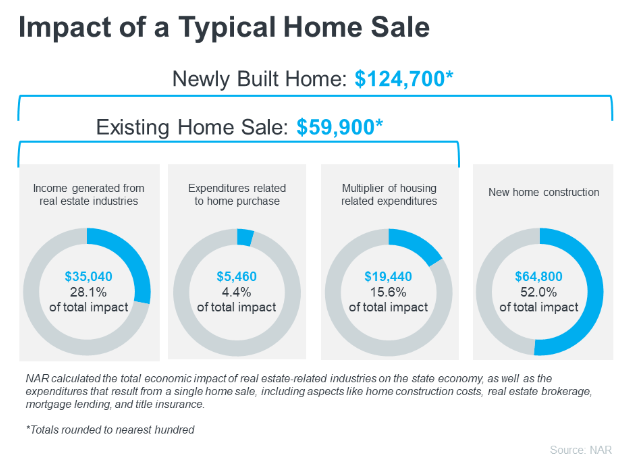
When a house is sold, it really boosts the local economy. That’s because of all the people needed to build, fix up, and sell homes. Robert Dietz, Chief Economist at the National Association of Home Builders (NAHB), explains how the housing industry adds jobs to a community:
“. . . housing is a significant job creator. In fact, for every single-family home built, enough economic activity is generated to sustain three full-time jobs for a year . . .”
It makes sense that housing creates a lot of jobs because so many different kinds of work are involved in the industry.
Think about all the people involved with selling a house—city officials, contractors, lawyers, real estate agents, specialists, etc. Everyone has a job to do to make your deal go through. So, each transaction is a big help to those who work and live in your community.
Put simply, when you buy or sell a home, you’re helping out your neighbors. So, when you decide to move, you're not just meeting your own needs—you're also doing something good for your community. Just knowing your move helps so many people around you can give you a sense of empowerment as you make your decision this year.
Every time a home is sold, it really helps out the local economy. If you’re ready to move, let’s get in touch. It won’t just change your life—it’ll also do a lot of good for the whole community.
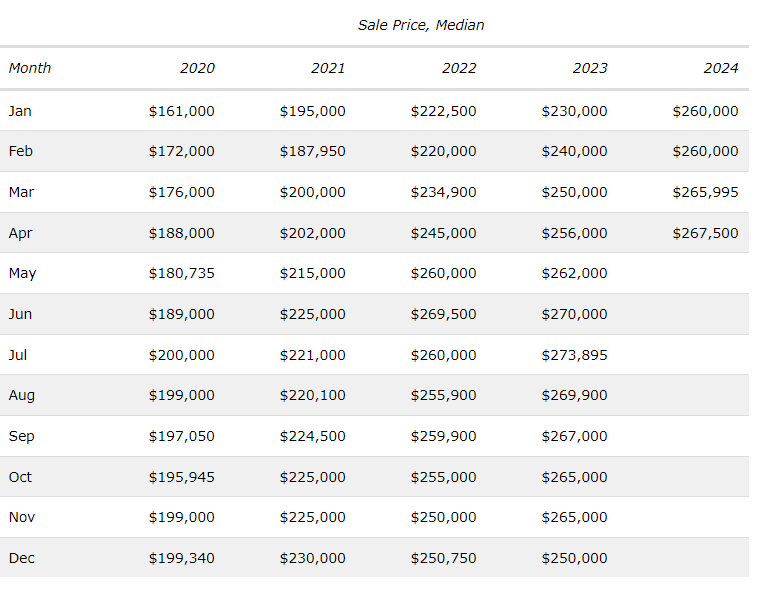
The median sale price in the Triad is rising at a more stable and normalized rate.
For more details, let's chat.
.jpg)